
Visit & explore
Rookhope Arch geosite
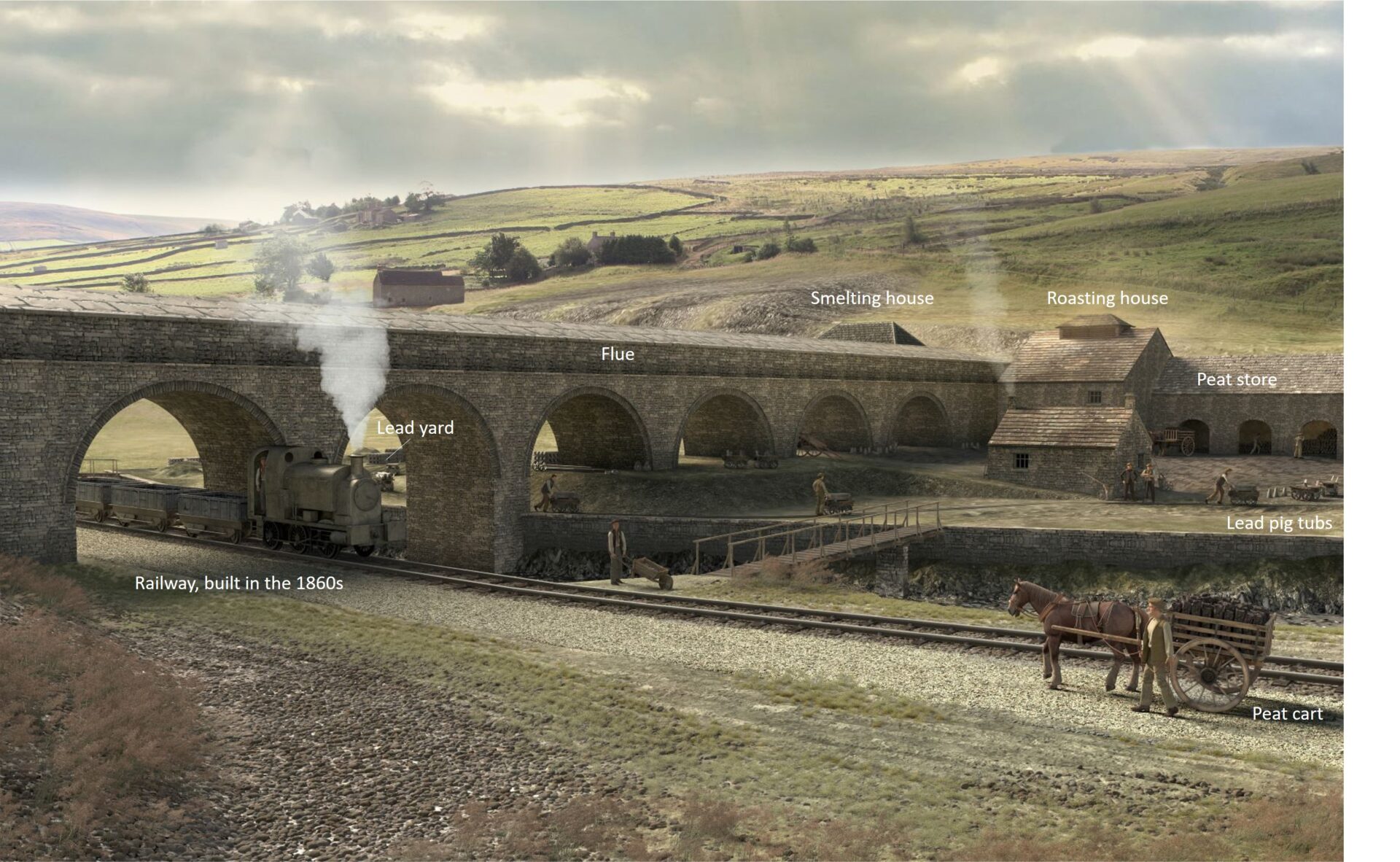
Rookhope Arch was part of the Rookhope lead smelting mill where lead metal was extracted from ore mined in the area. It was one of a line of arches that carried a flue across the valley that took the lead fumes away up the hillside. The very long, sloping flue allowed the fumes to cool and lead particles could be recovered from the inside.
The Rookhope flue was completed in 1810 and was 1.5 miles (2.4km) long, with a wooden chimney at the end, where the escaping gases were now quite cool. Working at the ore hearths A new mill was built here in 1735 by the WB Lead business, replacing an earlier one nearby. By the late 19th century it had expanded and changed to what you see in the illustration. The roasting house prepared the ores for smelting. They then went to the smelting house, pictured above. Peat was cut from the surrounding fells, dried, and used for fuel in the ore hearths. The smelted lead was cast into bars known as ‘pigs’ and stored in the lead yard. It was originally taken over the moors to Newcastle on strings of pack ponies.
This once busy mill closed in 1919, although lead mining continued at Rookhope into the early 1930s.
Main image: Recreation of Rookhope smelting mill. Illustration by Simon Edwards – HistoryRebuilt.com
More to explore
Use the link below to view the visit and explore map, and discover walks, trails, activities and more across the North Pennines National Landscape and UNESCO Global Geopark.

