Visit & explore
Hanging Shaw geosite
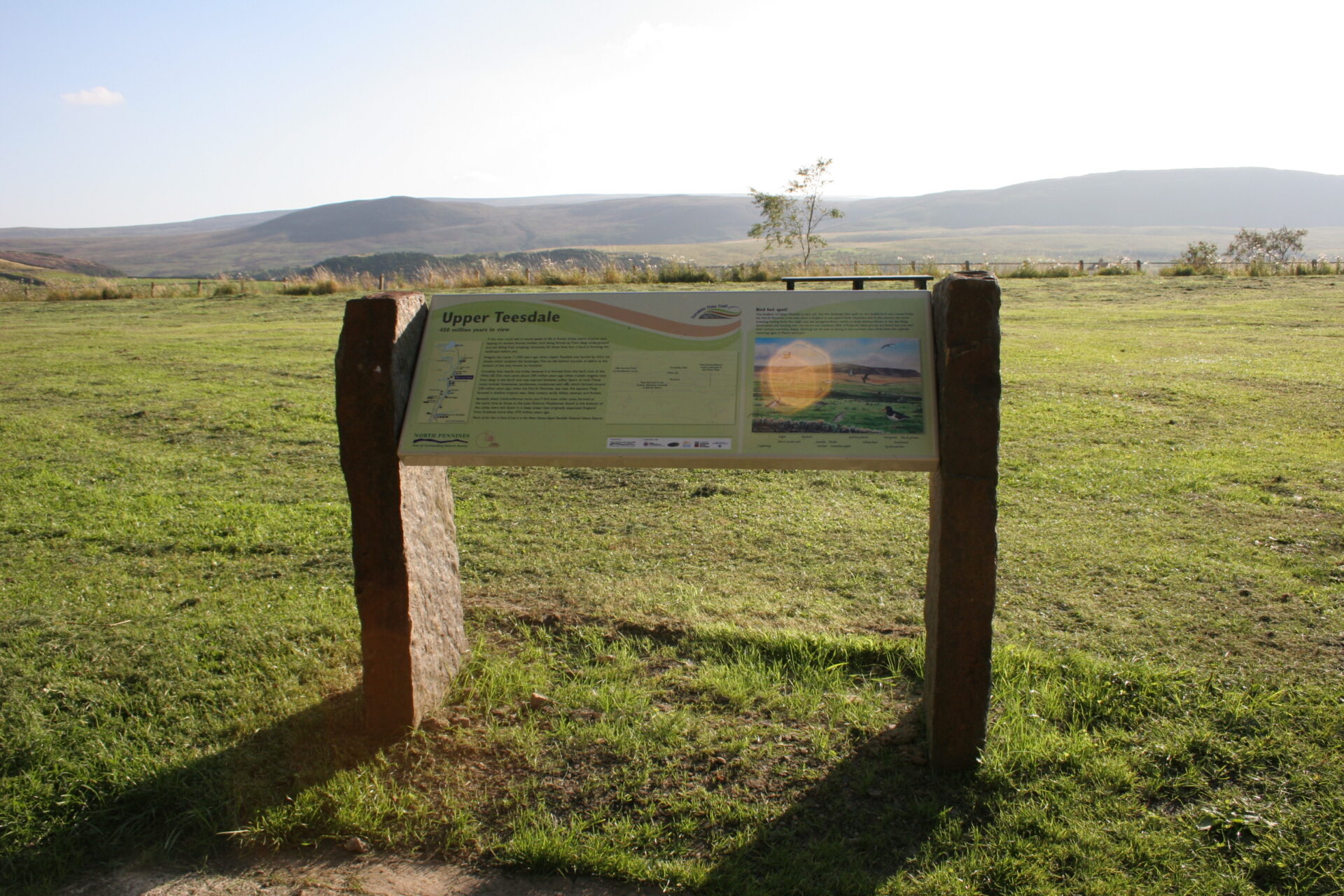
If the view from Hanging Shaw car park could talk it would speak of life in frozen times, warm tropical seas lapping on ancient shores, molten rock being forced up from deep underground and ash falling from erupting volcanoes. All these have lent a hand in forming the landscape before you.
Imagine how this may have looked 11,500 years ago when Upper Teesdale was filled with a huge mass of ice, a glacier, which sculpted the land. At the end of the Ice Age, as the ice was melting, the cliff base was eroded – creating the steep outline you see today. The ice also left behind mounds of debris at the bottom of the scar, known as ‘moraine’.
Cronkley Scar stands out today because it is formed from the hard rock of the Whin Sill. This rock came about 295 million years ago when molten magma was forced up, from deep in the Earth, in between softer layers of rock. These softer rocks include limestones, sandstones, mudstones and coal, which formed around 350 million years ago. The North Pennines was near the equator then and these rocks formed in – shallow tropical seas, deep oceans, sandy deltas, swamps and forests.
Beneath these Carboniferous rocks you’ll find even older ones, formed at the same time as those in the Lake District. Deep-sea muds and volcanic ashes, found in the bottom of the valley, record an epic collision of two landmasses, which closed an ancient sea and caused volcanoes to erupt 450 million years ago.
More to explore
Use the link below to view the visit and explore map, and discover walks, trails, activities and more across the North Pennines National Landscape and UNESCO Global Geopark.