
What we do
Nature recovery
Although in some ways rich in wildlife, even in Teesdale and Swaledale nature is in retreat and the future of these landscapes is uncertain. Tees-Swale seeked to reverse this trend, combining the ‘Lawton principles’ with economically viable farming for the benefits of people and wildlife. The programme restored at-risk natural heritage, connected priority habitats, and helped to reverse the decline in biodiversity, through peatland restoration, grassland management and restoration, rush management, wetland creation, woodland and scrub creation, and instream/riparian works.
Peatland restoration
Restoring peatlands allows them to sequester carbon, bringing multiple benefits for flood reduction, watercolour, river sediment load and biodiversity. This work built climate change resilience into these damaged peatlands, working at a landscape-scale. Tees-Swale restored a minimum of 1,250ha of severely damaged and eroding blanket bog, reducing the amount of carbon being lost to the atmosphere.
Grassland management and restoration
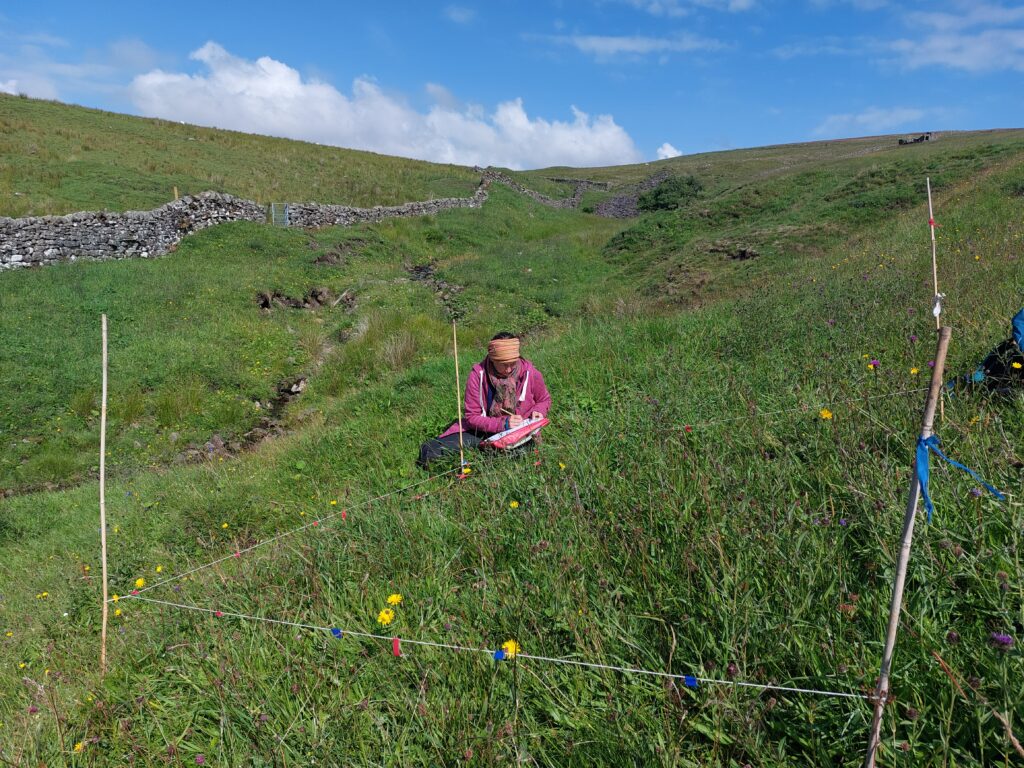
By working with farmers to continue the traditional way of managing meadows, the programme helped maintain species-rich upland hay meadows and steep banks with improved habitat connectivity and increased pollinator diversity. Species rich verges are an important part of this grassland mosaic and we worked with highway authorities to ensure their sympathetic management. Tees-Swale restored and enhanced the botanical diversity of a minimum of 225ha of upland hay meadows, steep uncut banks, species-rich road verges and other grasslands, through the addition of green hay, plug plants or physical management.
Rush management
Through the funding of rush control by weed wiping and cutting on 1,000ha, rush cover was reduced and a mosaic of rush and grassland cover restored across neighbouring holdings. Management of rush pastures have been improved by advising groups/clusters of farmers on the 5-year rush management plan. Tees-Swale restored and enhanced 2,500ha of rush pasture to good quality habitat for upland breeding waders.
Wetland creation
Small-scale wetlands and scrapes benefit biodiversity, in particular breeding wading birds by providing important feeding areas. Through mechanical excavation and the manipulation of drainage systems as appropriate, 40 wetlands/scrapes have been created.
Woodland and scrub creation
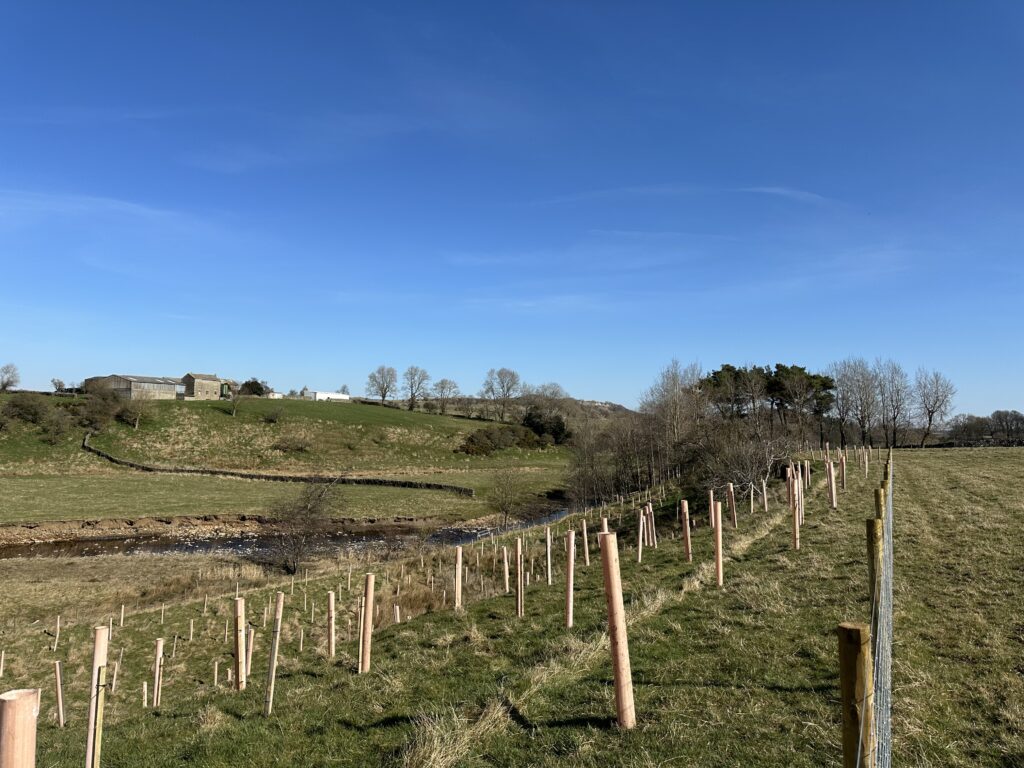
We worked to increase the connectivity between existing fragmented woodland areas, through the planting of new native woodland and scrub, enhancing areas of degraded woodland and the introduction of native woodland planting into areas of conifer plantation across neighbouring holdings. We trialled new approaches to management and creation of scrub and wood pasture areas. Tees-Swale created and enhanced a minimum of 200ha of native broadleaved woodland, enabling the establishment of 200,000 trees.
We established a new growing space for native wildflowers and trees at the North Pennines National Landscape’s Bowlees Visitor Centre. The nursery helped the team deliver actions for nature recovery across farms in Teesdale, including woodland creation and the restoration of upland hay meadows and species-rich grassland. The plants and trees established here went on to be used to support the principle of bigger, better, and more joined up habitats that underpinned the Tees-Swale programme.
Instream/riparian works
We improved fish passage and habitat quality, benefiting fish passage on 21km of the River Greta.
Did you know…