
What we do
Wild connections
The Fellfoot Forward Landscape Partnership Scheme (LPS) aimed to create a landscape that is richer in wildlife by working with farmers and landowners to implement the Lawtonian principles of habitat creation and management: “More, bigger, better, more joined up”. This was achieved through a broad partnership, utilising a variety of funding and advisory mechanisms, and with a whole landscape approach, in which habitats are enhanced and created on the most meaningful of scales.
Woodland, hedgerows, open grown trees and wetlands are all essential components of the Fellfoot Forward landscape which together help provide a biodiverse, resilient, productive and healthy ecosystem. For these features to provide maximum benefit to both wildlife and people, they must form part of a connected network of habitats that allows dispersal and movement of species for breeding and feeding, and in response to climate change.
During the development stage of the scheme, farm visits and workshops engaged farmers and landowners across the project area and revealed the many pressures and uncertainties facing farm businesses today, and that farmers in the area care deeply about their role as custodians of the landscape. The broad partnership, encompassing agents across the environmental and land management sectors, understood the barriers to achieving a landscape that is better for wildlife, and together identified how the Fellfoot Forward LPS could be delivered for biodiversity. Several farmers and landowners keen to improve and enhance the opportunities for wildlife on their land were identified. Woodland creation schemes were identified, hedgerows mapped for restoration, and potential spaces for new wetland located. Partners in the RSPB provided time to advise farmers on optimal wading bird habitat.
Farm futures helped to identify many more opportunities for habitat creation and improvement. Space for nature was created by working with farmers and landowners to develop new native woodland, plant in-field trees, create new wetland features, and to increase the area and number of wild field margins. Replacement infield trees were planted to anticipate the loss of ash and other veteran trees, securing the future of parkland habitat.
Existing habitats were enhanced by working with farmers and landowners to implement woodland management plans, and to improve habitat for breeding waders, for example through rush management. Partners at the Woodland Trust and Natural England monitored and enhanced existing young woodland, ensuring that schemes planted in the last ten years were in good health.

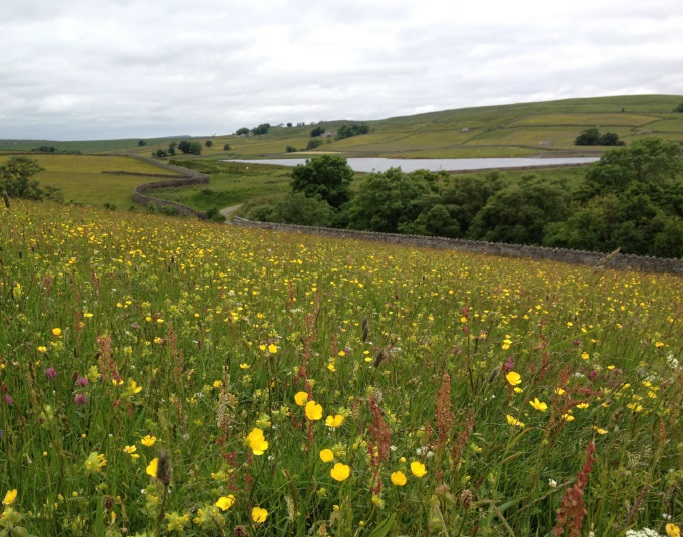

Better connected habitats were created by planting new hedgerows and trees, and increasing the area and number of wild field margins used by small mammals, birds and pollinating insects. Some of these activities were deliverable through existing Countryside Stewardship incentives. However, many landowners were able to access this funding due to the scale of their projects, restrictions on amendments to current schemes and uncertainty over the future availability of environmental support.
The Fellfoot Forward Environment Grant was developed as a source of funding for landowners to implement conservation schemes. In this way, the scheme could increase resilience in the natural environment despite a context of uncertainty and a lack of other funding incentives. Meanwhile, North Pennines staff continued to work in partnership with government agencies to ensure that available Stewardship funds deliver the maximum conservation impact and follow Lawtonian principles.
Much of the scheme’s landscape comprises farmland, but a patchwork of villages, village greens and connecting lanes offer yet more opportunities to make space for nature. During consultation we registered interest from local communities and wildlife groups to work on small projects to increase biodiversity on village greens, on road verges, schools and in private gardens. Work of this kind was supported through the team working with communities and groups, supporting applications for community grants, and providing training through citizen science.
Training in valuable conservation skills was offered through farm futures and citizen science, and put into practice through the habitat restoration opportunities identified. These projects engaged farmers, landowners and local volunteers in learning vital habitat restoration and creation techniques, such as hedgerow and woodland creation. Citizen science, community grants and arts connections were used to involve the community in learning about, protecting, and celebrating the biodiversity and habitats of the Fellfoot Forward landscape. Local community groups, such as Kirkoswald Environment Group, were supported in practical projects such as promoting wildlife-friendly gardening and enhancing village green management.
Project Partners

Funded by


Discover more
You may also like
Did you know…