
News
11 February: celebrating women in science
11 February 2026
11 February: celebrating women in science
To mark International Day of Women and Girls in Science our senior peatland field officers Lisa and Becka share their inspiring careers in science.
How did you get involved in peatland restoration as a career?
Lisa: I have always loved nature but was completely unaware of all of the career possibilities growing up. I thought the only options were to work as a vet or for the RSPCA. I ended up studying Fine Art as my first degree and it wasn’t until much later in life I began to rethink things, as many people did during lockdown. I felt I needed to be doing more so I decided to start volunteering. I joined a local botany group and signed up to volunteer with the North Pennines National Landscape for botanical and bumble bee surveys. I then applied to study a master’s degree in Conservation and Ecosystem Management at Newcastle University – I loved every minute! From then I knew I wanted to work in habitat restoration as I loved botany and fieldwork and wanted a diverse job, which encompassed all the skills I had learnt. I never saw myself working in peatland restoration but when I saw a job advertised with the North Pennines National Landscape it seemed to tick every box. I started as a peatland support officer thinking I would do it for one year to gain some experience but three years later I am now a senior peatland field officer.
Becka: Having grown up on a farm in Teesdale, I was always interested in the natural world and originally wanted to go into a career in animal care. Over time this developed into an interest in conservation which influenced my decision to study Environmental Geography and later Ecology and Wildlife Conservation at university. Being from Teesdale, the uplands were always an area I felt passionate about and the university modules about them were the ones I found most interesting, particularly when I had the opportunity to carry out fieldwork on Great Dun Fell and Mickle Fell. After completing my master’s degree, I was keen to carry out conservation work in my local area and applied for the role of Peatland Support Officer with the North Pennines National Landscape team. I didn’t have the required experience at the time but was given the opportunity to do some volunteering with the team to get to know more about peatlands and restoration. After I had built my experience elsewhere in the conservation sector, I reapplied for the role in 2022 and got the job in November that year. I am also now a senior peatland field officer.
Before you joined the North Pennines National Landscape team, did you already have an idea of what the peatlands in the North Pennines would be like?
Lisa: I had done a small amount of peatland survey work during my master’s degree but had no idea what the peatlands in the North Pennines would be like. My first winter with the team was definitely a shock to the system!
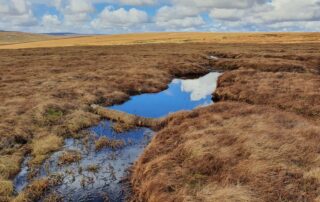
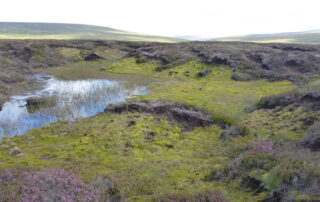
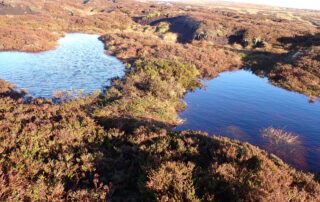
Becka: Living in the North Pennines I thought I was pretty familiar with them, but nothing can really prepare you for what the peatlands are like until you’re out there – especially in the middle of winter! Getting to experience the vastness and uniqueness of the landscape, become familiar with the species that are found there, learn about the history contained within and associated with peat, and see how healthy bogs are vital for so many aspects of our lives is still amazing.
When you first started working in peatland restoration, was there anything about it that you didn’t expect?
Lisa: All of it! I definitely didn’t realise how much was involved. There’s surveying and monitoring and all the preparation work which goes with that, GIS mapping, specification and report writing, landowner and stakeholder engagement, contract management and UAV flying…the list goes on!
Becka: There’s a lot more involved in the process of restoration than I expected, from all the preparation work, to engaging with different stakeholders and battling the elements. The scale of the work is also bigger than I initially expected.
What would a typical day at work be like for you?
Lisa: There is no typical day, every day is different which is great. We are heavily weather reliant for restoration, especially for airlifting, where contractors use helicopters to fly materials to peatland sites, so that keeps things interesting.
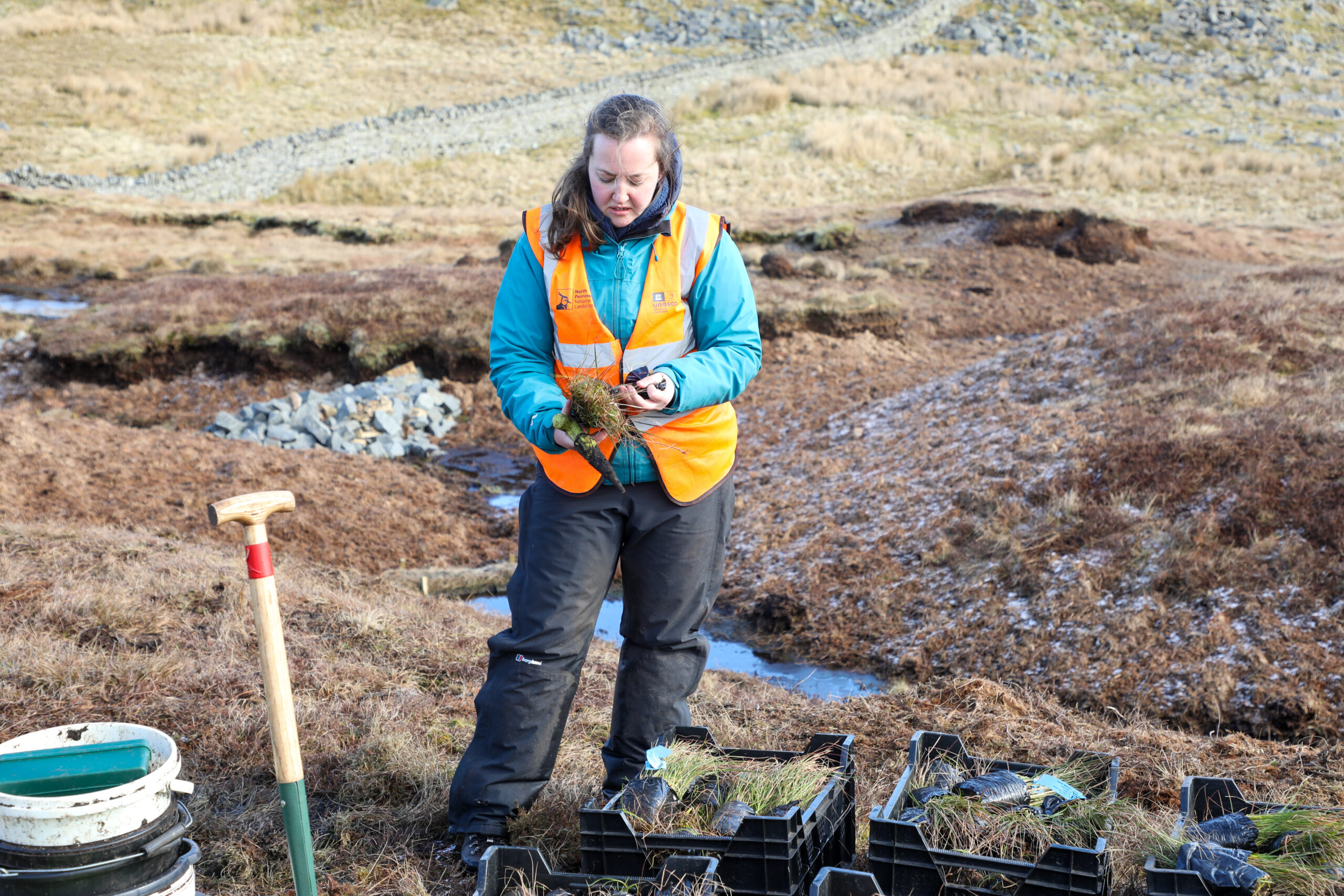
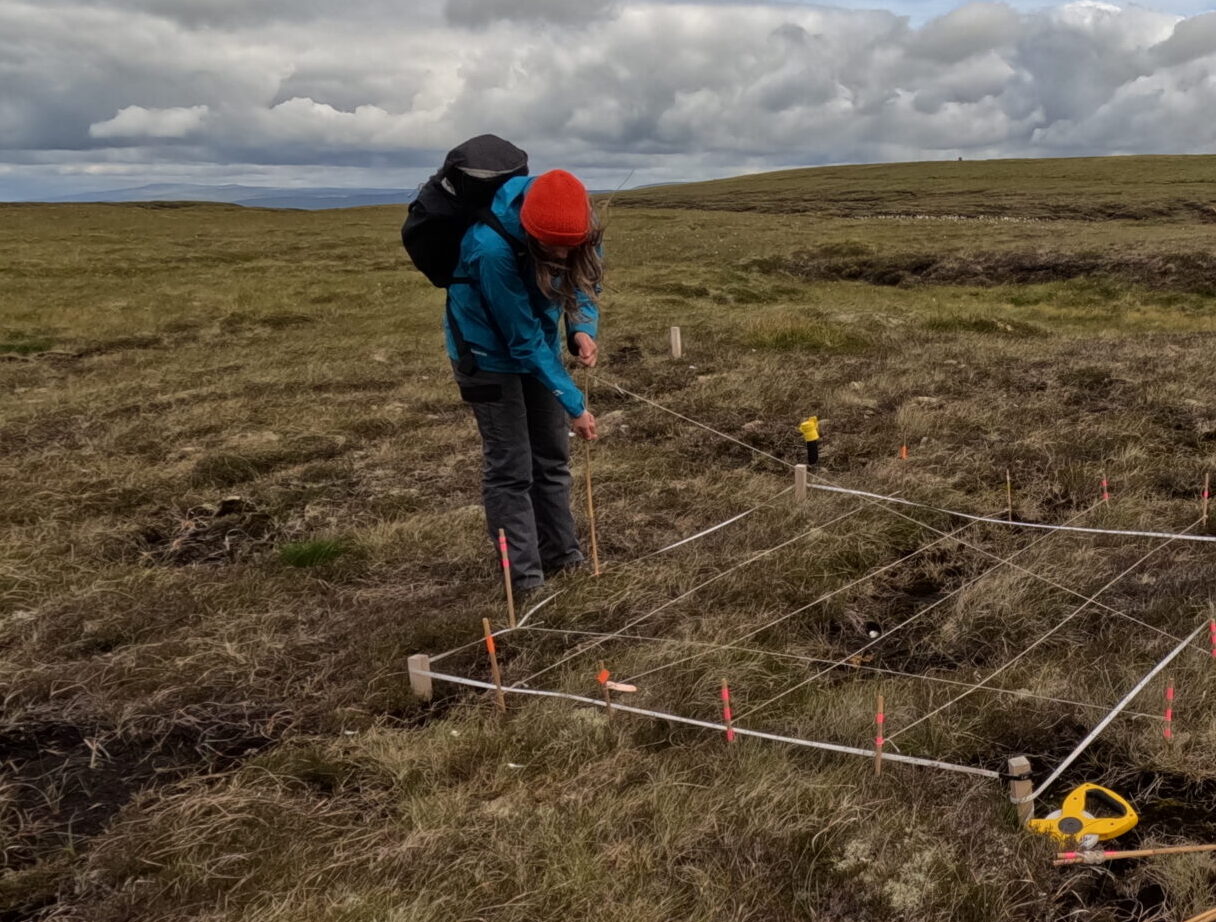
Becka: Although no two days are the same, when I’m out at a peatland restoration site I often do a lot of walking over difficult terrain. You’re walking up and down slopes, sometimes through thick heather and you can’t see where you’re stepping so you end up putting your foot right into a deep bit of water! In autumn and winter we’ll usually be busy surveying sites so we can write restoration plans or we’ll be out overseeing restoration projects. In summer we’ll typically be carrying out monitoring on current and past restoration sites to see how these are changing over time.
What is one of the most interesting things you have learnt doing peatland restoration work?
Lisa: I feel like I’m constantly learning within the role, there is always new research, techniques and methodologies. We are continuously looking to improve and adapt how we work. Recently I’ve really been enjoying learning more about our historical use of peatlands and the stories and fables that come with that.
Becka: I feel like I learn something new on every site I work on. I enjoy learning from other colleagues in the peatland world about the different techniques they use in restoration and seeing how peatlands can vary even within the North Pennines as well as throughout the UK. I also find it fascinating learning just how unique and intricate peatlands are, particularly as they can sometimes be viewed as a bleak landscape.
What do you like most about your job?
Lisa: Being involved in the restoration process from the initial peatland surveys and creation of a restoration plan to the project management and completion. Seeing peat dams fill with water, restoration interventions slowing the water flow and erosion, and bare peat revegetate is extremely rewarding, it’s being able to visualise the results of the work.
Becka: I love being able to see a site through the process from beginning to end; from carrying out initial surveys on a site, to seeing the work being undertaken and eventually carrying out monitoring as the restoration begins to take effect. It’s really rewarding to see areas of bare and eroding peat begin to revegetate and recover.
What skills do you think are particular important for a peatland field officer to have and why?
Lisa: You have to love the work and understand and value what it is we are trying to do. The work can be very difficult and very physically tiring during busy restoration or survey seasons. We all have different strengths – passion and dedication are most important.
Becka: Anyone working in peat needs to be adaptable – working in these areas means things can change quickly and plans need to be adjusted. They also need to be resilient and not mind being outdoors in all kinds of weather! You see all extremes on peatlands from intense sunshine in summer to (much more often!) thick fog, downpours, high winds and freezing temperatures in winter.
What advice would you give to young girls who aren’t aware of peatland restoration as a career option?
Lisa: Volunteer. Reach out to conservation organisations which do peatland work and see how you could help – you will quickly discover if it’s the route you want to explore further.
Becka: I would say that working in peatland restoration can be demanding but incredibly rewarding work. Peatlands are underappreciated but working in them offers a brilliant opportunity to learn new skills and make a real difference to a vitally important environment.
Find out more about our work here: peatland restoration