News
Artist residency explores the North Pennines heritage
4 February 2026
Artist residency creatively explores the North Pennines industrial heritage
Blog by artist-in-residence 2025, Jenny Brook – Boo and The Noodle
In the heart of the North Pennines – a vast upland landscape shaped by millennia of geological forces and centuries of lead and silver mining – I was awarded an artist residency by the North Pennines National Landscape team as part of The Land of Lead and Silver project. This year-long, part-time residency was not just an opportunity to make work; it was an invitation to explore how creative practice can bring to life the hidden industrial heritage embedded in this extraordinary place.
The project uses art, workshops and community engagement to connect people with the stories of lead and silver mining that have shaped not only the land, but also the culture and communities of the area. This explorative programme offered a chance to experiment, connect, and grow my creative practice. Set against the sweeping beauty of the North Pennines, the residency provided not just a space to create, but a place to reflect, discover, and be inspired by a landscape where history and nature intertwine seamlessly.
I am primarily a textile artist, living and working near Penrith, although my practice spans a range of mediums. I had visited the North Pennines before applying for the artist residency and was immediately captivated. It always felt like a very special place, full of untold stories and hidden textures waiting to be explored. From my home in Morland, I have a perfect view of the rolling Pennines – a constant presence that shapes my days.
I chose this residency because I am fascinated by the intersection of art and history. I wanted to explore the question: what does it mean to create art in a place where history and nature are so deeply intertwined? At the same time, I felt somewhat stuck with my own textile work and unsure of my next steps. The residency arrived at exactly the right moment in my career, although I was nervous about applying – like so many artists, I wrestle with imposter syndrome. I wanted to expand my practice, try new techniques, and explore without the constant pressure of earning a living, and this felt like the perfect opportunity.
I opted to complete the residency part-time over a year, allowing me to maintain my small business while fully immersing myself in the project. The first few weeks were devoted to research. I knew almost nothing about lead mining but I quickly became fascinated by the complexity of the industry, the harshness of a life underground, and the remarkable resilience of the people who lived and worked there. I found myself drawn in many directions: the unique landscape, historical photographs, extraordinary feats of engineering such as underground canals, gravity-powered aerial rope-ways, striking geological formations, as well as the day-to-day richness of life for lead miners and their families in the 1800s and beyond. There was so much material that it was difficult to focus on just one thread.
Much of my research took place online, exploring historical documents relating to the North Pennines’ lead mining heritage, but I also visited local museums, libraries and sites, including Killhope Museum, Alston Moor Historical Society (with special thanks to Simon Danby for his patience and guidance), Weardale Museum and Chapel, and, of course, the Nenthead Mines themselves. I spent countless hours walking in and absorbing the landscape. I fell in love with the moors, and especially with Nenthead and its surroundings. It was there that I realised I wanted my work to reflect the inseparable relationship between the natural landscape and the lives of the miners. The land was not simply a backdrop – it shaped their daily existence, routines and identities.
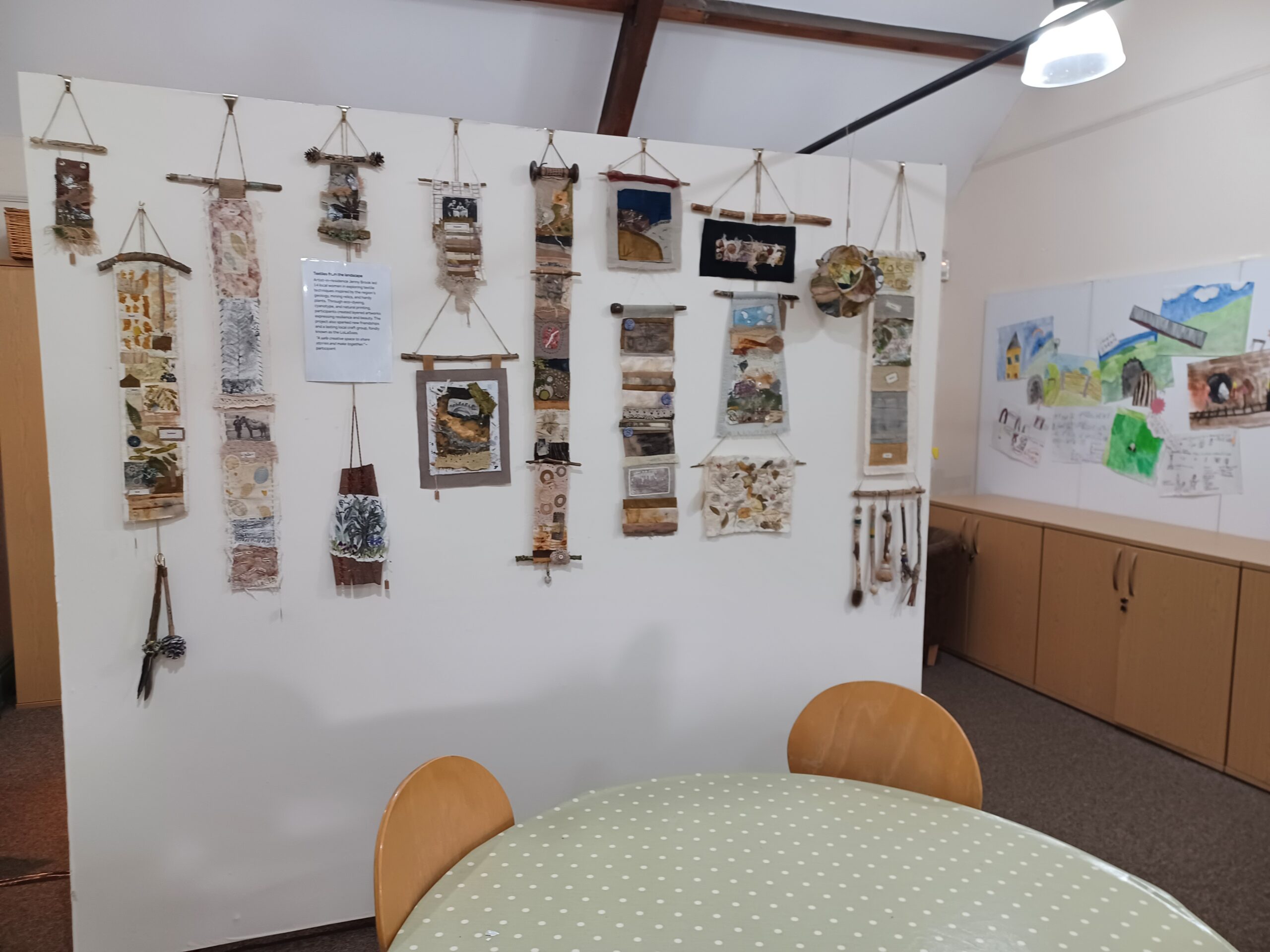
Once this became clear, I began planning my workshops, a small but important and immensely gratifying part of the residency. I aimed to work with the same group of women over several weeks, providing continuity and supporting the creation of final pieces for an exhibition at Bowlees Visitor Centre.
Over the course of four Sundays, participants drew inspiration from the North Pennines’ rich mining heritage, exploring industrial sites, local geology, and the resilient flora and fauna that thrive in this lead-shaped landscape. Textile techniques ranged from eco-dyeing with responsibly-sourced local botanicals to cyanotype printing, mono-printing and mark-making using found and recycled materials. Historical photographs, mining specimens borrowed from the Alston Moor Historical Society, and local archival texts informed the creative process, guiding participants as they experimented and reflected. Individual pieces were collaged into final textile artworks, capturing personal responses to living in a landscape shaped by mining, with some participants choosing to draw directly on historical stories. These workshops also provided a supportive social space that fostered connection, reduced rural isolation and encouraged the sharing of stories.
Joyfully, the workshops achieved lasting outcomes: a monthly social crafting group formed at The Hive in Nenthead, and a new textile project led by artist, Julia Neubauer, at her studio in Alston, both supported by the North Pennines National Landscape team via the Land of Lead and Silver project.
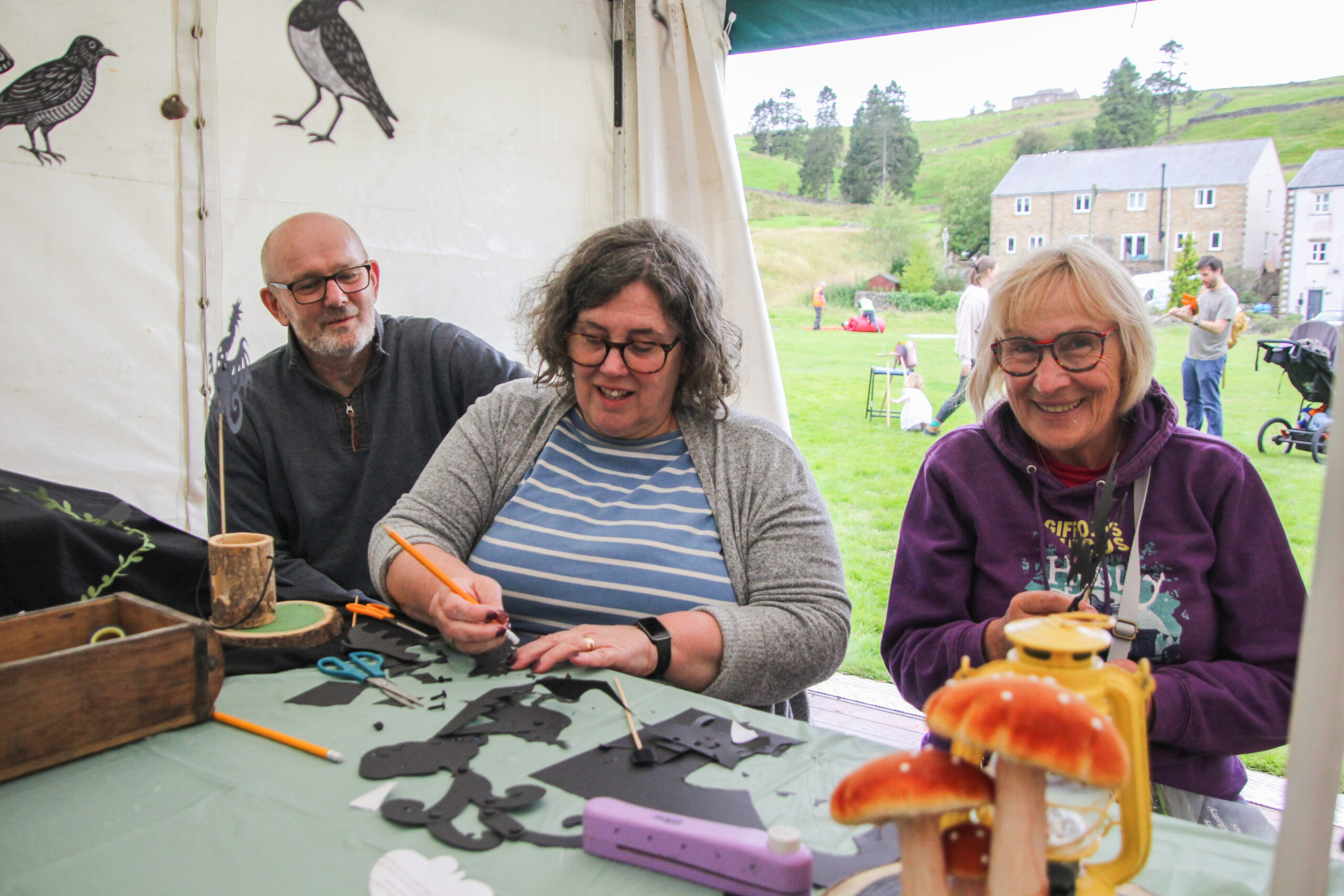
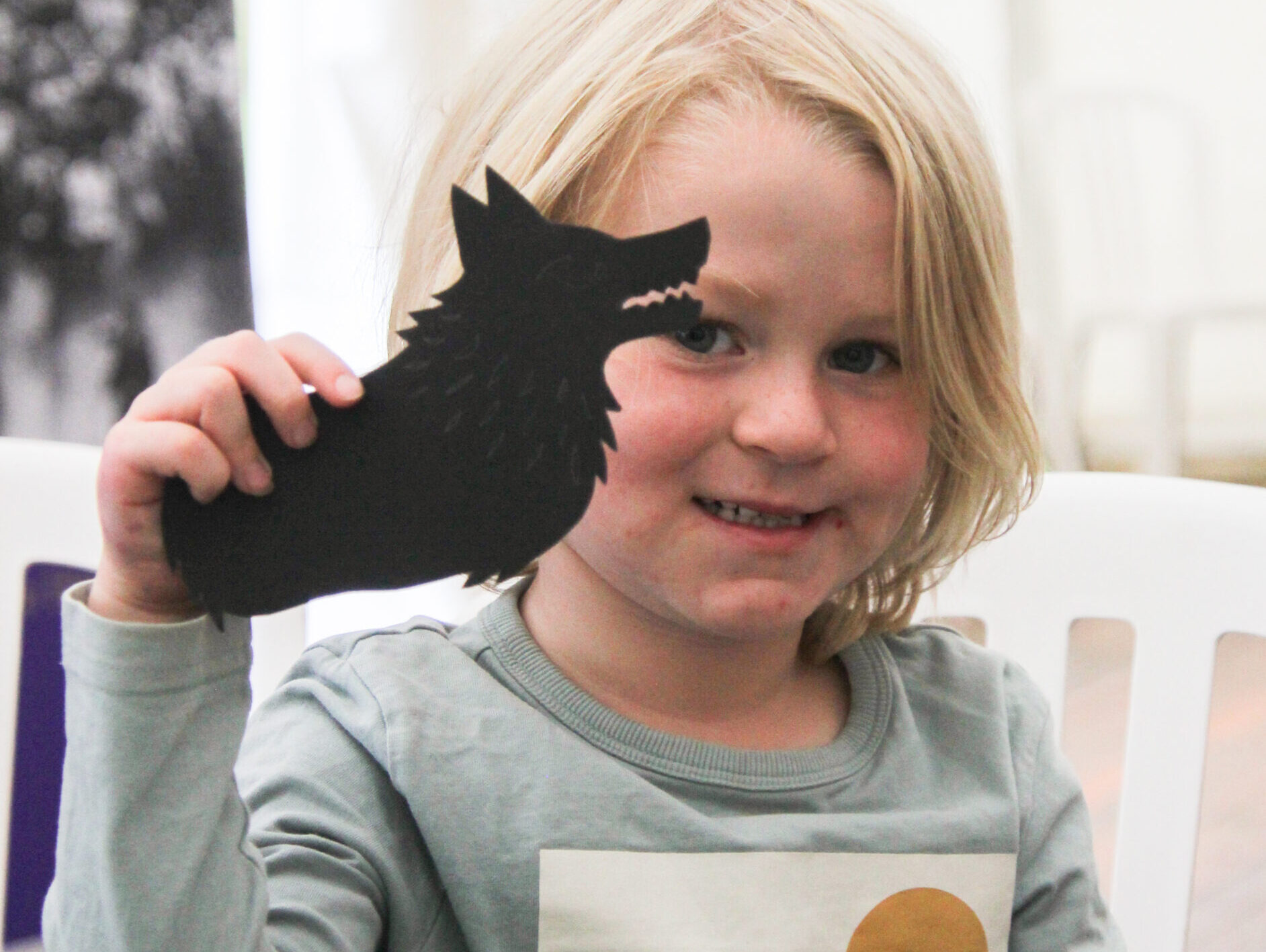
Other workshops included puppetry and storytelling, which explored the myths, legends, superstitions and customs held by local people and imagined by miners deep within the subterranean tunnels. I was fortunate to be part of Nenthead200, an event that brought the community together for a weekend celebrating 200 years since the planning of the village by the London Lead Company. I also took part in the Allendale Wolf Festival, where I presented my mining-themed shadow theatre and ran puppet-making activities inspired by similar themes.
This residency has been an incredible journey of discovery, reflection and growth, and it is not quite over yet. I am currently working on a final piece: a crankie storytelling box that tells the story of Mary, a lead mining cart woman from the 1800s. Using light and shadow, the piece seeks to illuminate her forgotten story and give voice to lives that are so often left unseen, particularly highlighting women’s frequently undocumented roles within the mining industry.
The time and space this residency has given me to grow as an artist – both in confidence and in technique – has been invaluable. It has connected me with so many wonderful people, as well as with the wild landscape of the North Pennine moors. It has deepened my love of history and my fascination with uncovering small truths, superstitions and overlooked stories.
This experience has reminded me of the profound ways in which landscape and history can inform creativity, and it has left me inspired to continue exploring, experimenting and sharing stories through art and puppetry. I can’t recommend this residency enough – it’s an incredible opportunity and I wholeheartedly encourage other artists to apply.
Information about artist opportunities and the community arts programme as part of the Land of Lead and Silver project is here.
Part of the Land of Lead and Silver project which is led by the North Pennines National Landscape team and funded by The National Lottery Heritage Fund, thanks to National Lottery players, and Historic England.