
News
A year as a Tees-Swale trainee
27 March 2026
Tees-Swale: naturally connected trainee
Harry Craig looks back on his year as a trainee with the Tees-Swale: Naturally connected programme.
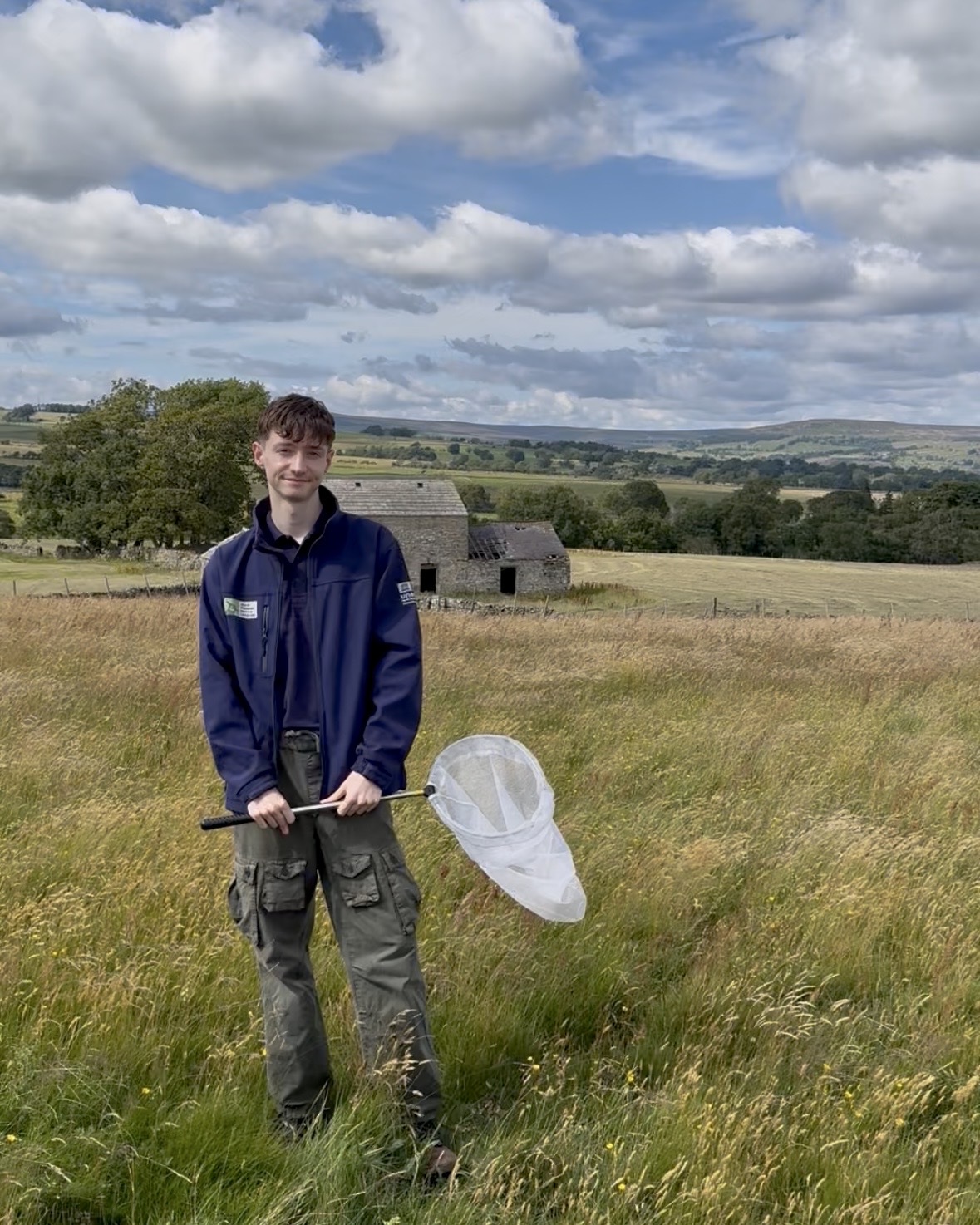
Harry Craig, community engagement trainee
As I come to the end of my traineeship with the North Pennines National Landscape team, I think back to the start of my time here: a sunny spring day in early April 2025. Standing under the Scots pine trees by Low Force, my gaze diverts away from the mesmerising, steady flow of water and down to the compacted ground under my feet. Dotted among the mounds of well-trodden dirt lay hundreds of burrows. Not for rabbits or badgers, but for bees. With each nest entrance no bigger than a pea, they would be very easily missed if you were not looking for them. Despite the sprawl of residences, it seemed that nobody was answering the door. I’d need to return at a later date if I was to meet the occupants.
Making my way back to Low Force on an even sunnier day in late April, I finally come face-to-face, or boot-to-antennae, with the locals. The ground is crawling with ashy mining bees, awoken by the warmth of spring. Being very careful with where I place my feet, I crouch down for a closer look. Each bee has two fluffy, light grey stripes on their back and a tuft of grey hairs on their face. The ashy mining bee is one of around 240 species of solitary bee that call the UK home, from mason bees to leafcutter bees, and from flower bees to parasites. Solitary bees do not form colonies like bumblebees and honeybees; they create their own individual nests, sometimes living adjacent to neighbours but still working independently. Brood-parasitic solitary bees do not go as far as making a nest or even foraging provisions for their own offspring. Instead, they break their way into the nests of other solitary bees to lay their eggs – an insect version of a cuckoo. From my crouched position by Low Force, I see this happen with my own eyes as I watch a brood-parasitic solitary bee digging its way into the nest of a mining bee.
Prior to starting my role at the North Pennines National Landscape team, I had a good ecological knowledge base from my educational background and my personal interests, but specifics like local bee ecology were new to me. Over the course of this past year as a trainee, I have been very fortunate to learn every day on the job from my fantastic colleagues, knowledgeable volunteers, external organisations and my own research. Not only has this been personally enriching, but I have done my best to use my new knowledge and skills to help people feel more connected to nature as part of community engagement work in the Tees-Swale: Naturally Connected programme, and North Pennines projects more broadly. I hope that by thinking back to the bees I have seen over the course of my traineeship, I can lead you through some of my personal highlights and learnings. Now, back to the bees.
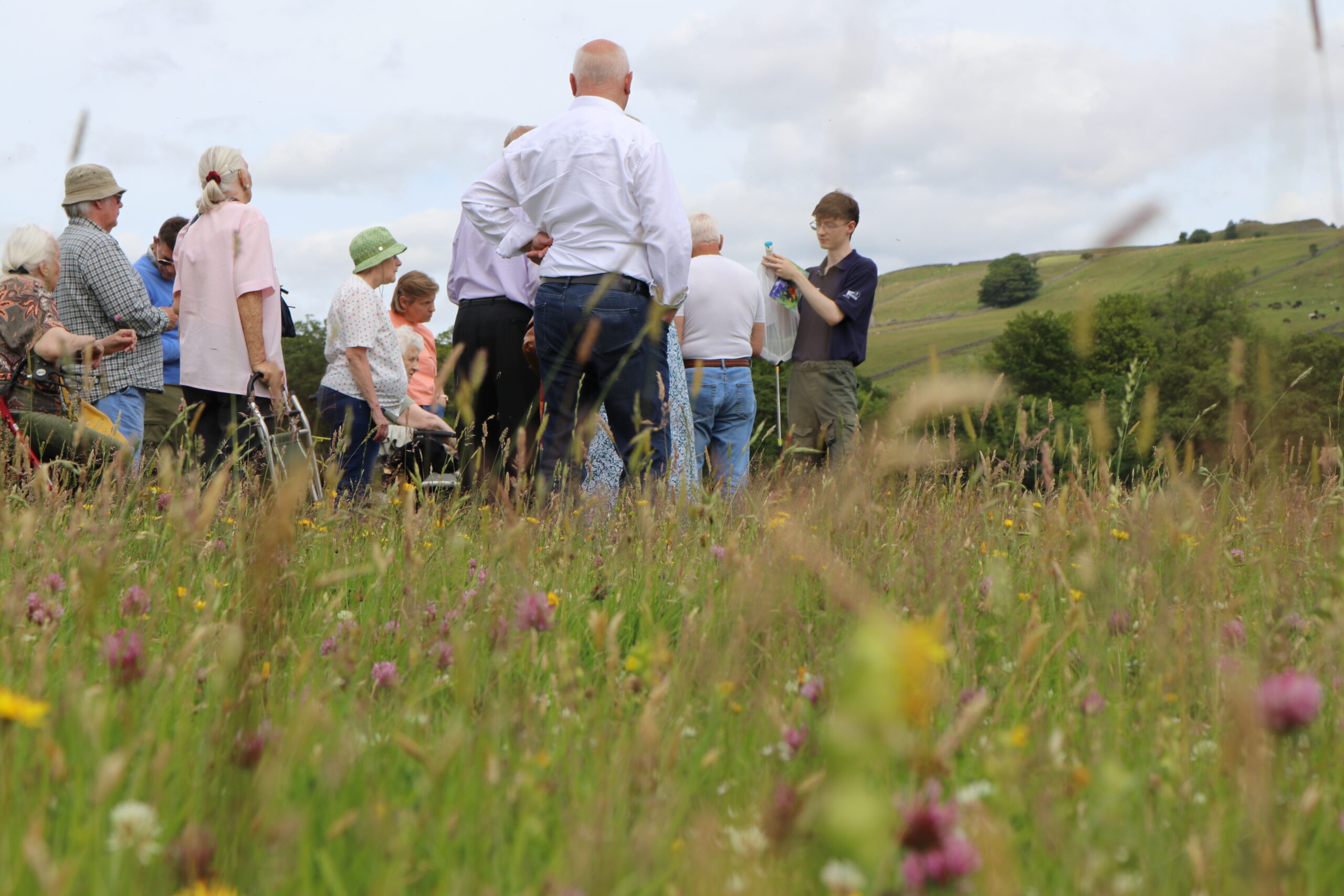
It’s another beautiful spring morning, this time in mid-May, starting the day sat upstairs at Bowlees Visitor Centre. I am here alongside enthusiastic volunteers and colleagues to receive bumblebee survey and identification training from Andy Benson at the Bumblebee Conservation Trust. Even as a bee-lover, I had no idea that the UK is home to 24 different species of bumblebee. The diversity of bumblebees is important for pollination of both wild plants and crops. One reason for this is that bumblebee species have varying tongue lengths to allow them to feed on a greater variety of flowers than the single species of honeybee. It would be easy to be overwhelmed by trying to differentiate 24 different bumblebee species, but Andy keeps it simple. To start, you need to know that it’s a bumblebee. Is it quite round and hairy? Does it have smaller eyes than a fly? Once you are sure you have a bumblebee, you look at the colour of the tail. Is it white/buff, orange-red, or ginger? Next you look at the pattern of its coloured bands, if it has any. We set off towards the River Tees to test our ID skills on the real deal. Busy amongst the Pennine Way bluebells, we find an impressive selection of bumblebees, including the vibrantly ginger and nationally scarce moss carder bumblebee.
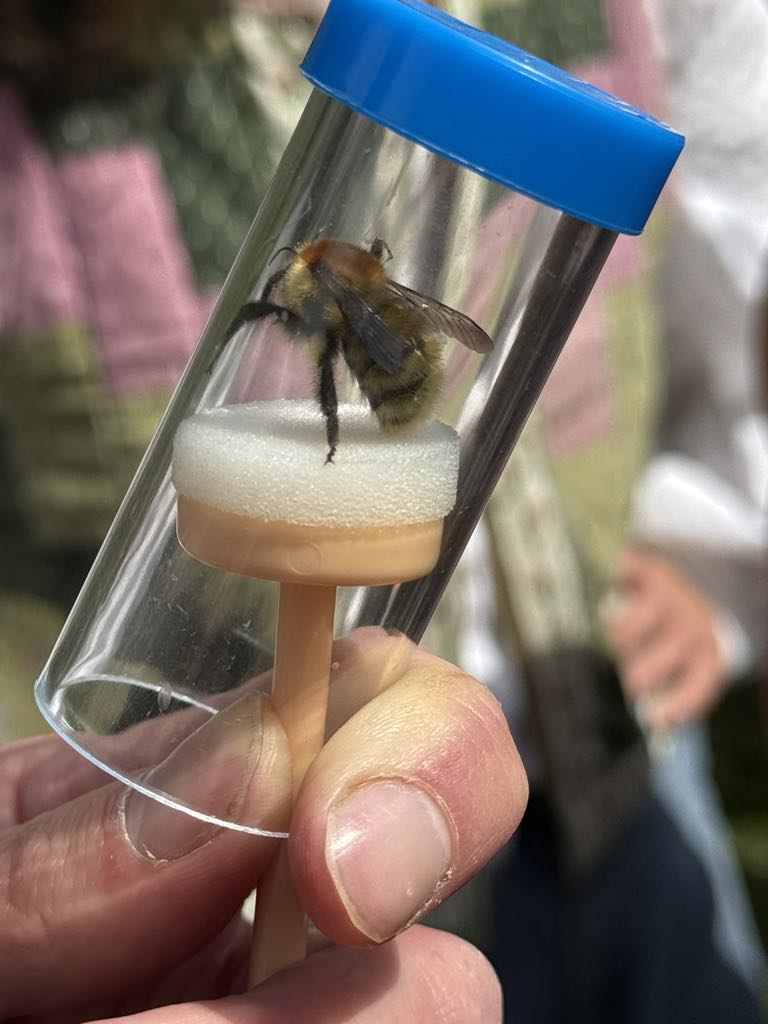
I was buzzing to use my new bumblebee knowledge in every way I could think of. Through the spring and summer months, I regularly walked a BeeWalk survey route in Baldersdale, recording the bumblebees I saw braving the windswept meadows. Along with collecting data for the North Pennines National Landscape team and the Bumblebee Conservation Trust, this experience was great practice identifying bumblebees in the field and gave me the confidence to talk about bumblebee ecology with anyone who was prepared to listen. In June, local primary school children joined North Pennines National Landscape staff for a visit to the species-rich upland hay meadows of Bowlees. The incredible diversity of meadow flowers here is a key food source for local bumblebee populations and the plants pollinated by the bees form part of a nutritious hay crop for grazing animals. Surrounded by red clover and yellow rattle, I introduced the children to the same bumblebee ID process that I learnt back in May with a game I made. Together we play bumblebee ‘Guess Who?’ with images from an ID guide, taking turns to ask questions and narrow down the identity of a mystery bumblebee, before heading through the meadows so the children could apply their skills to bumblebees we encountered in person.
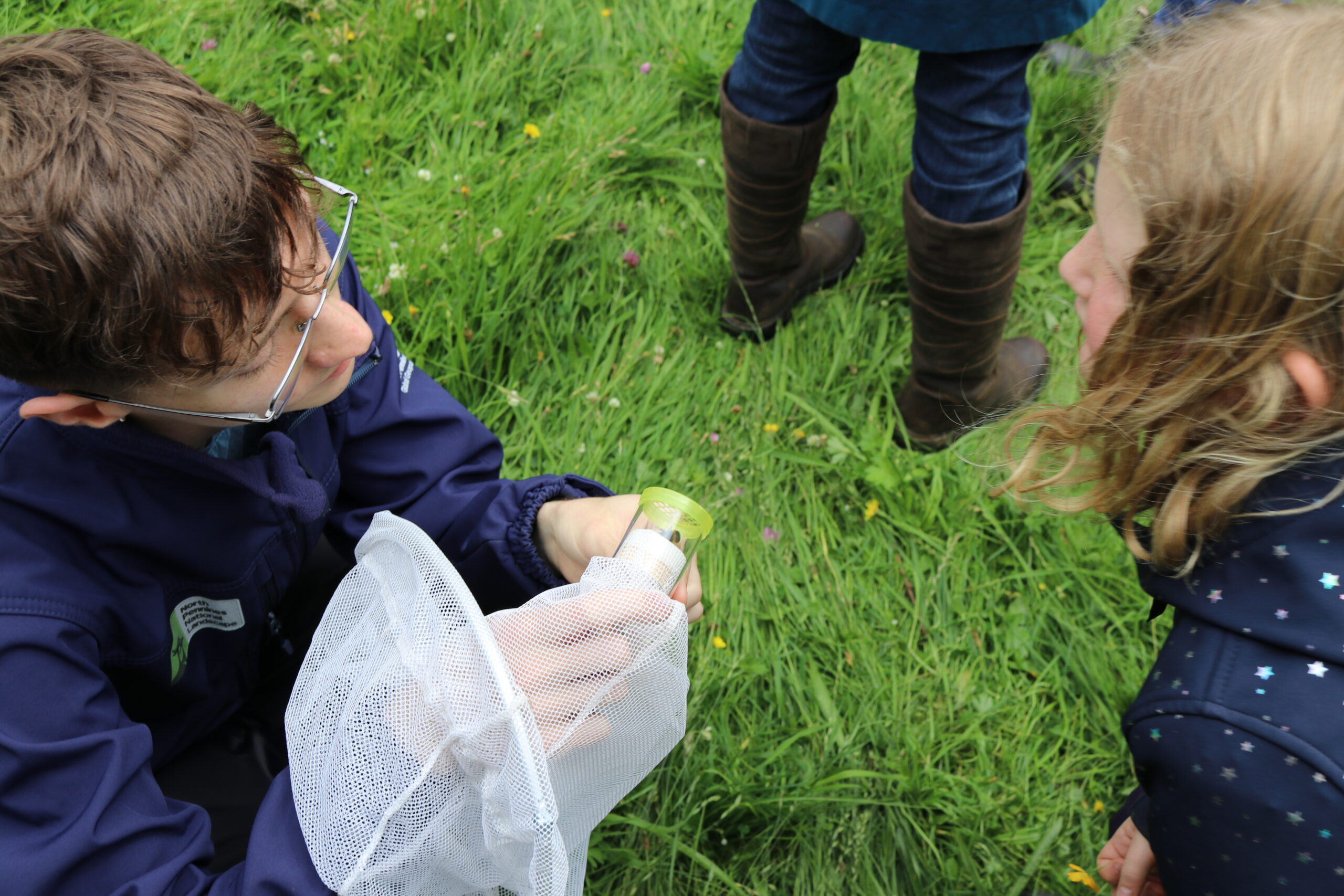
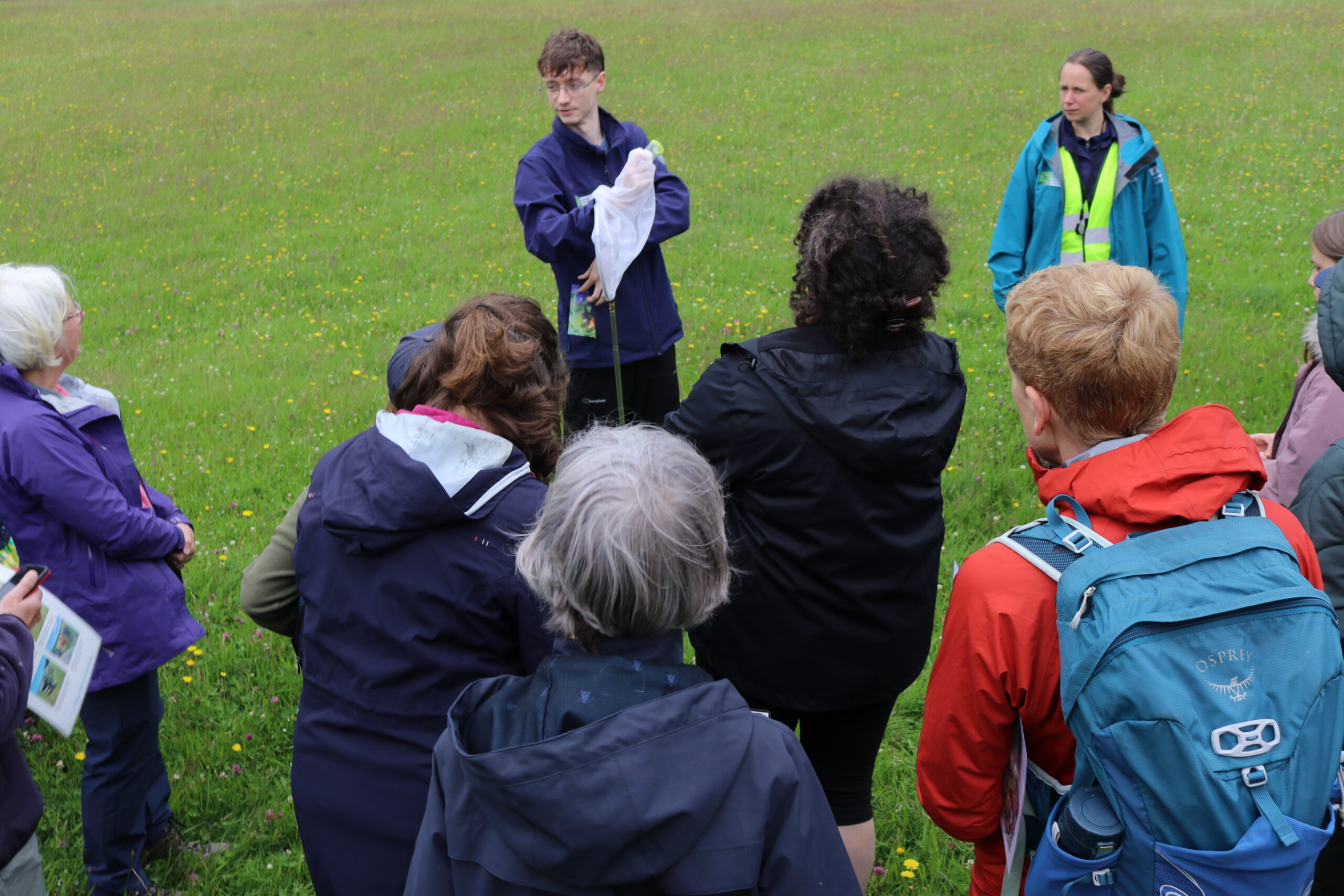
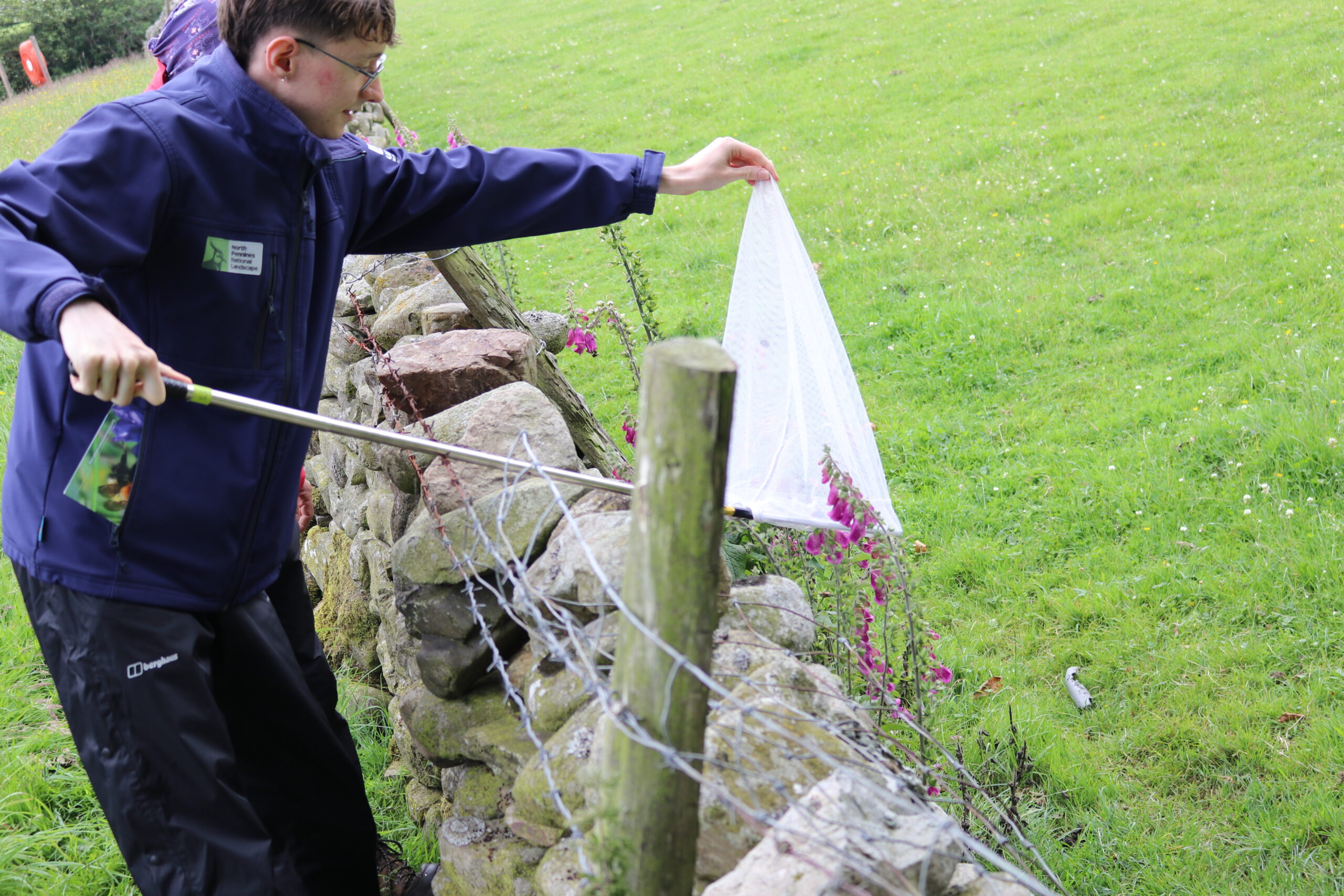
Flying forward now to a drizzly day in early July when the North Pennines National Landscape team held its Meadow’s Day celebration at Low Way Farm in Holwick. I join my colleague, Ruth Starr-Keddle, in leading a walk with visitors around the beautifully blooming meadows, appreciating the well-needed rain after a dry spring and early summer. While Ruth discusses upland hay meadow restoration and wildflower botany, I scan the damp meadows for any bumblebees that I could point out to the audience. We find a massive garden bumblebee queen nestled among foxgloves and tiny, round, heath bumblebee workers hunkered low in the vegetation. My six-legged volunteers help me to explain bumblebee identification and ecology, and the inter-dependency between pollinating insects and upland hay meadows.
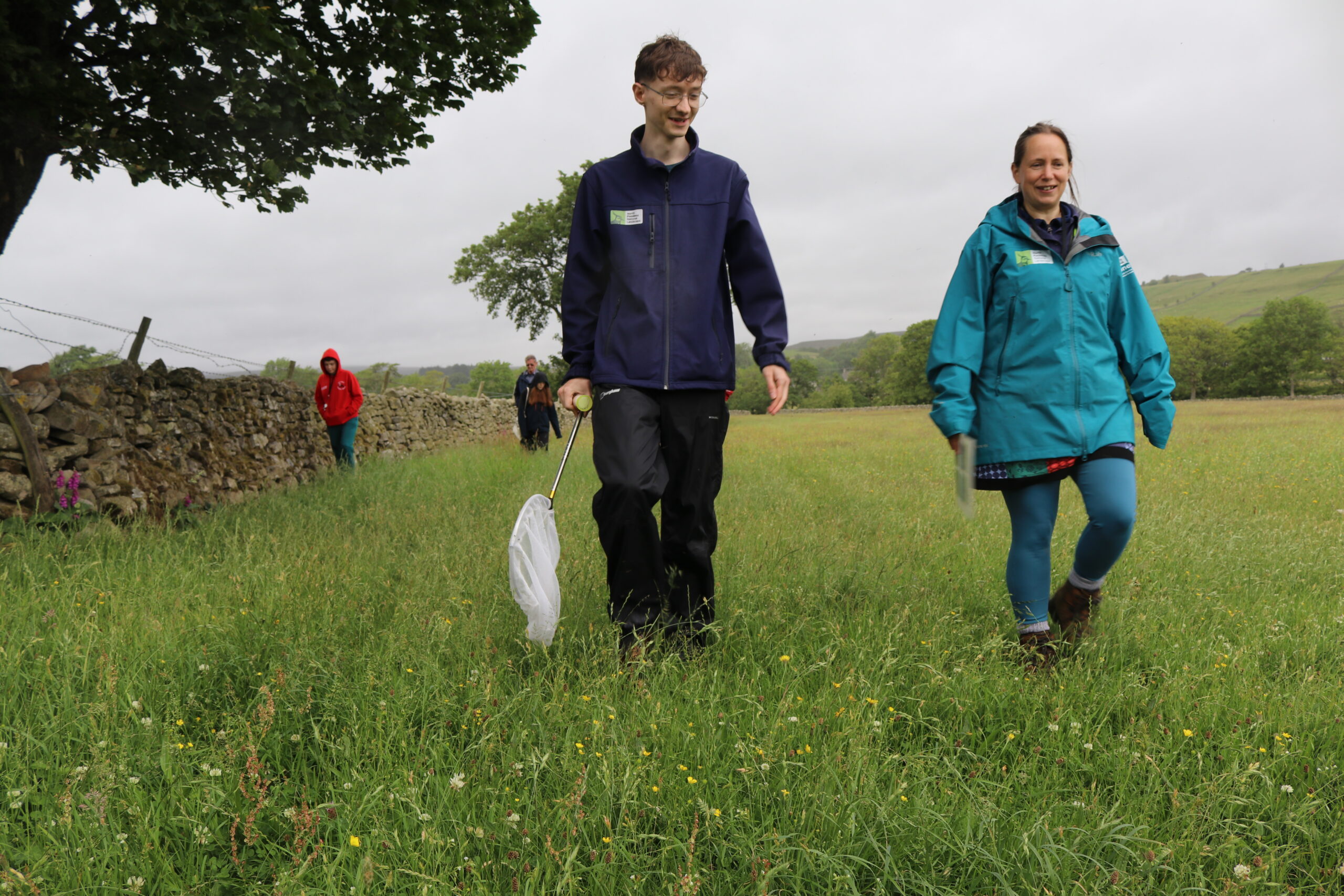
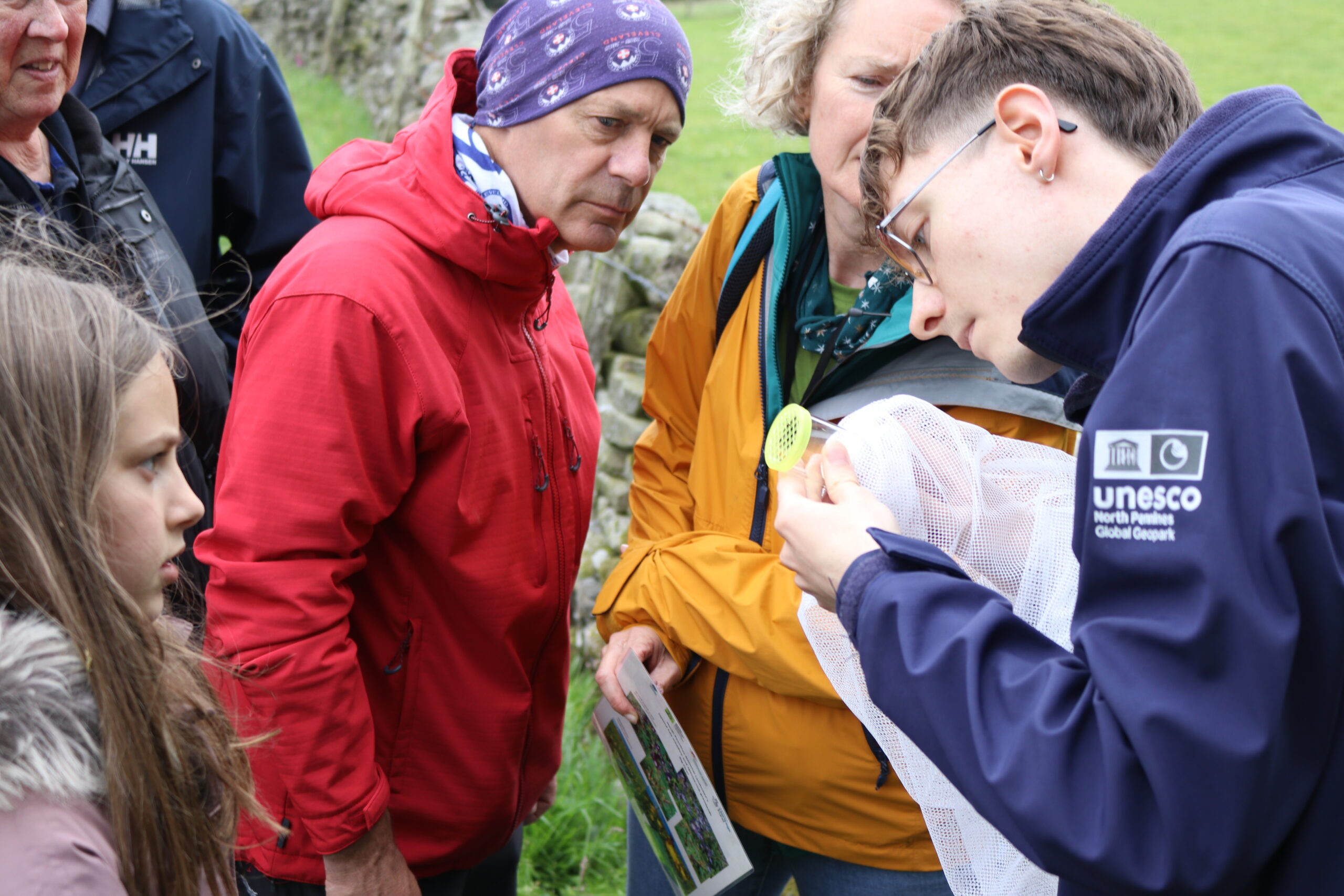
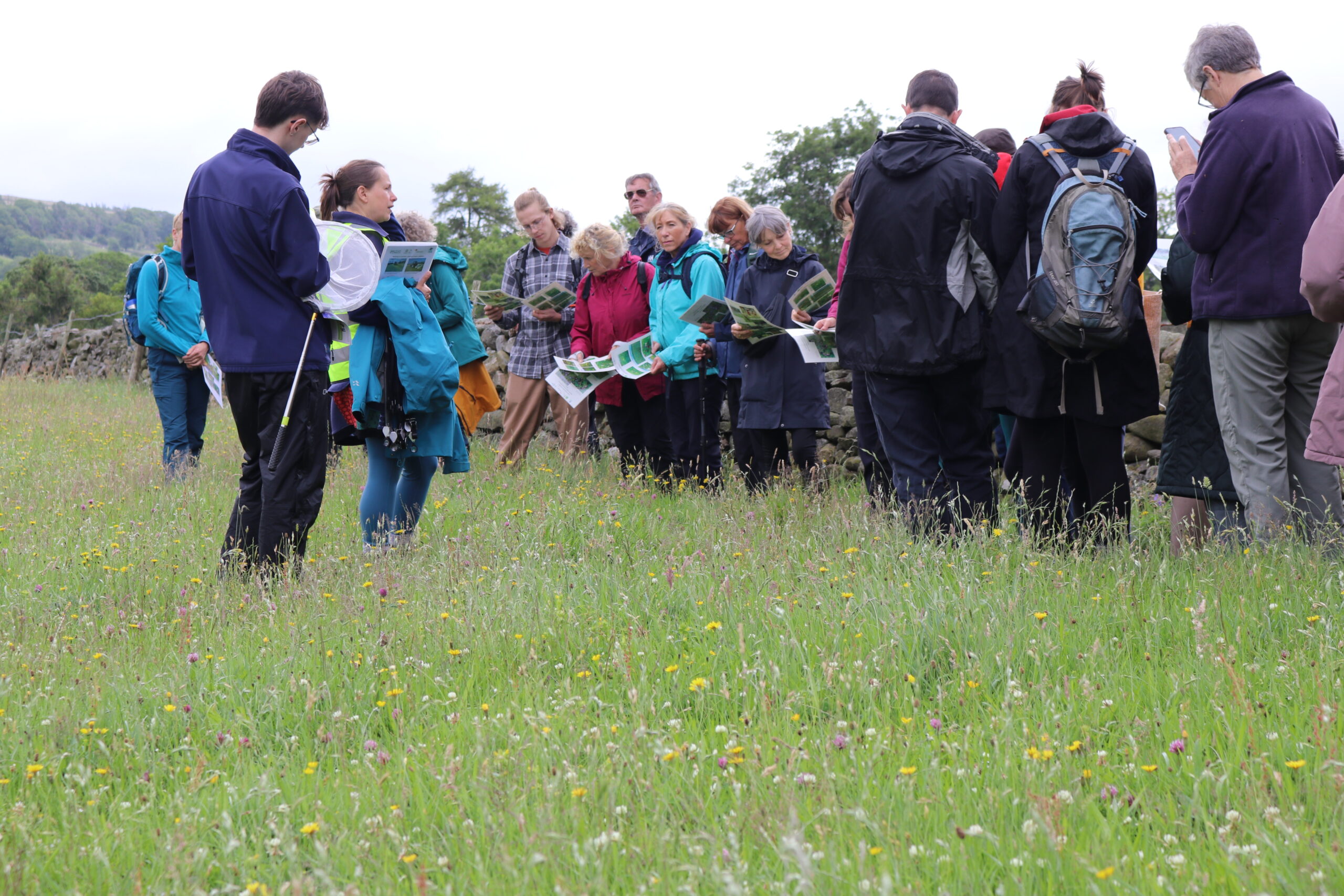
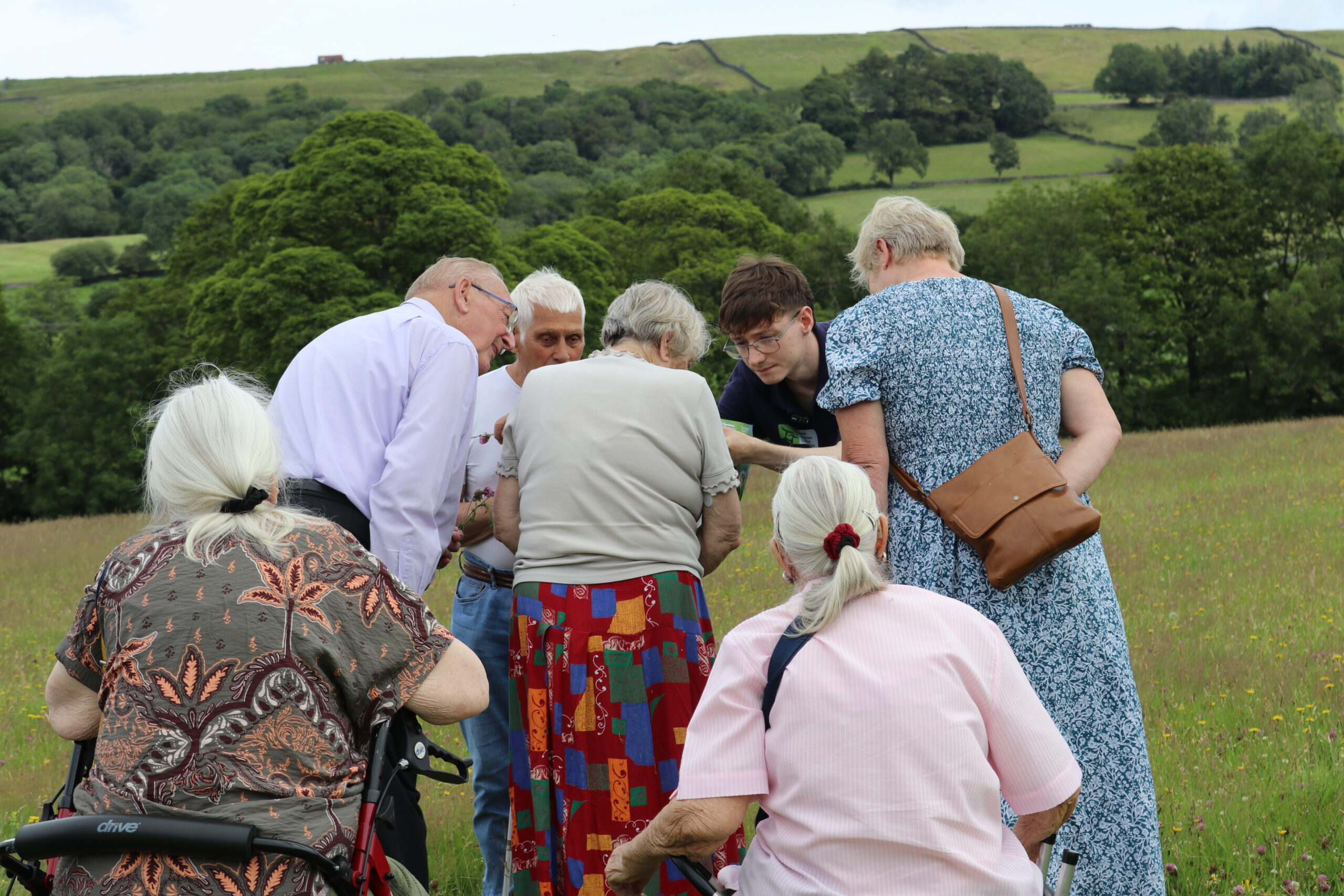
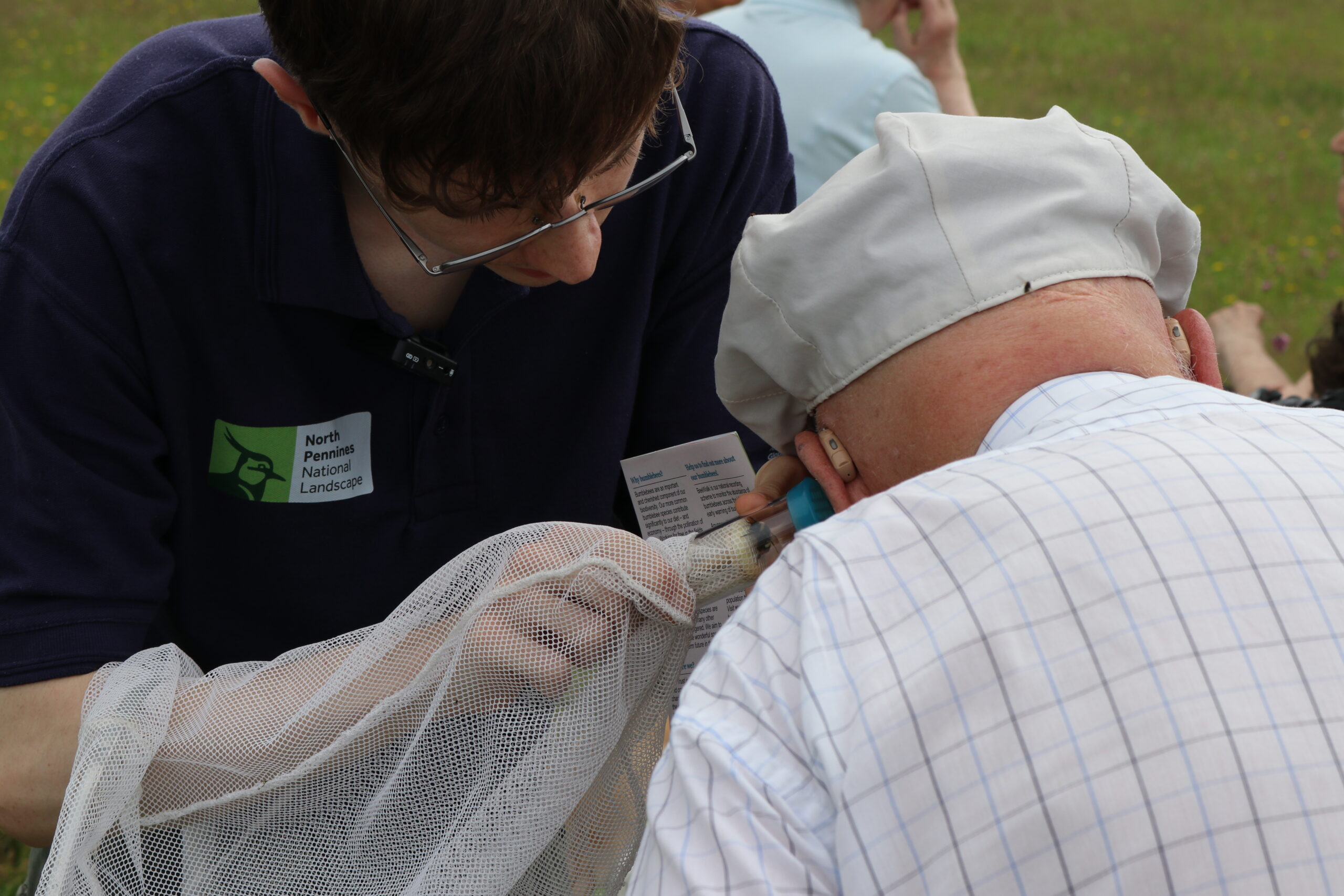
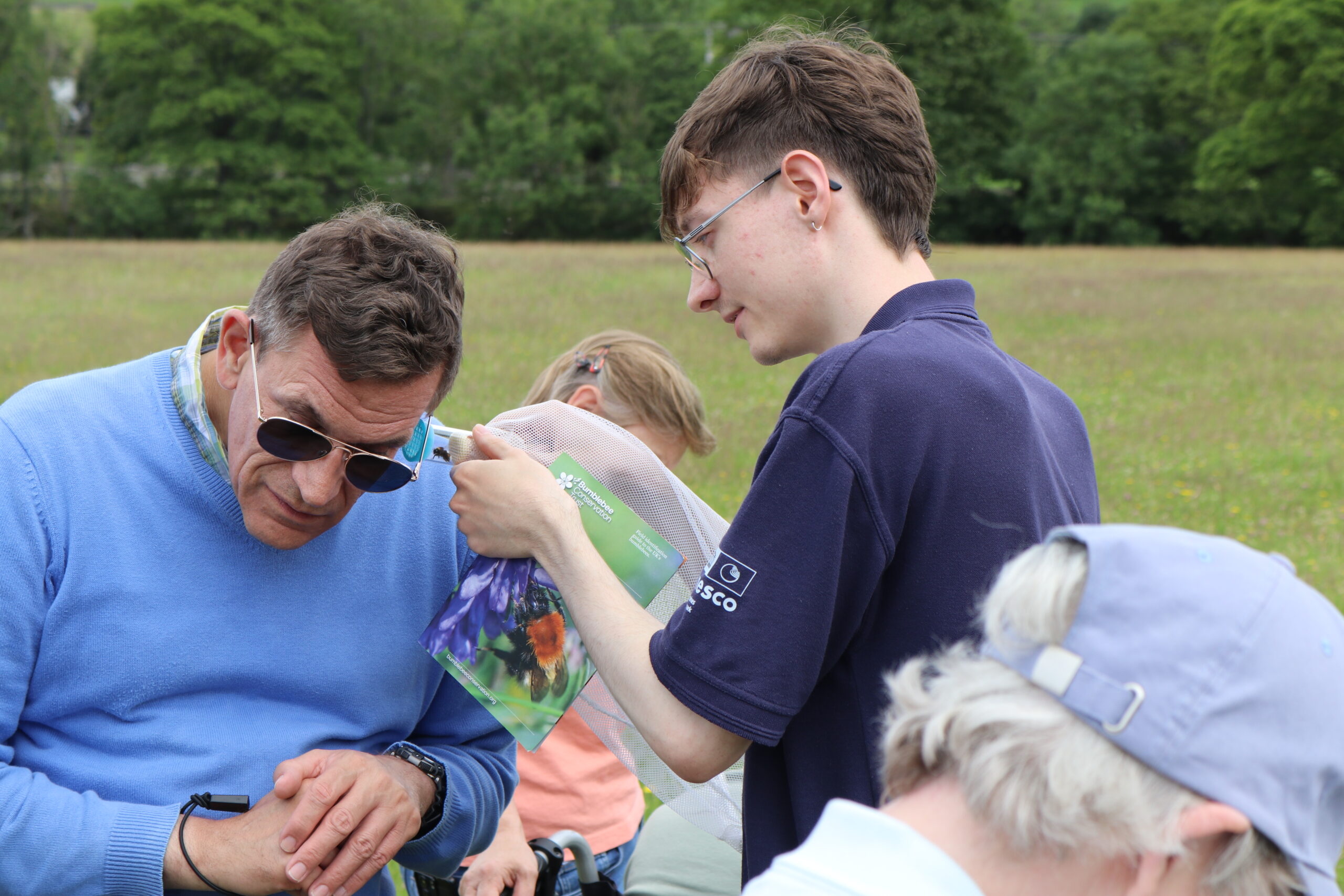
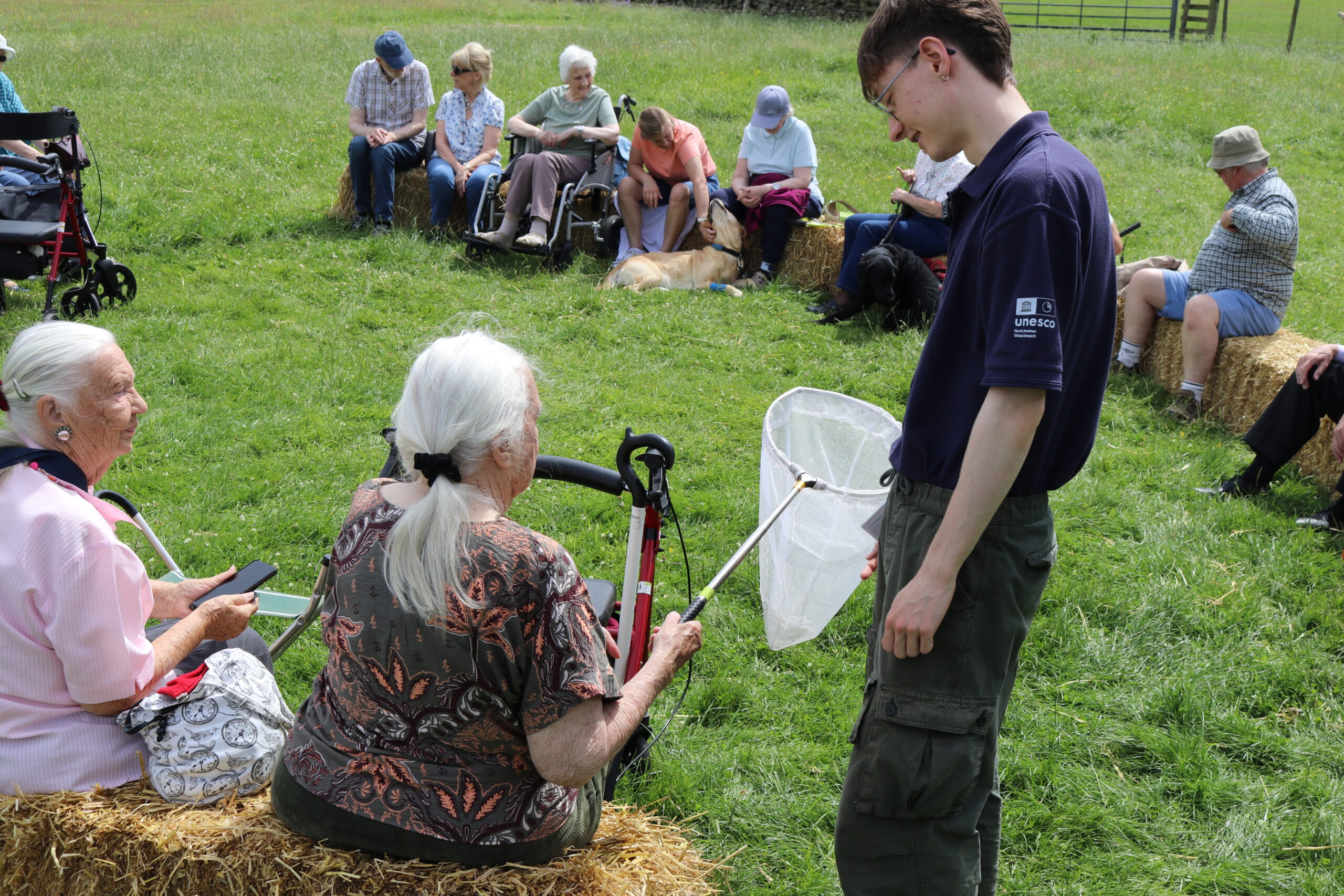
Returning to Low Way Farm on a scorching day in mid-July, I once again meet a garden bumblebee queen. This time I am talking to groups of visually impaired adults from Barnard Castle and Darlington. We discover the meadows together in ways that focus on senses other than our sight, smelling the liquorice scent of yarrow, the fruity odour of pineapple weed and differentiating white and red clover by the feel of their leaves. I carefully catch the bumblebee queen in a net, before I transfer her to my special pot and hold it up in turn to the ears of each person so they can hear the faint buzzing of the bee while I describe its appearance. After the bumblebee was released back onto the meadow and the groups left the farm, I reflected on that day as one of the most rewarding days of my traineeship. It was a privilege to help the group connect with the landscape.
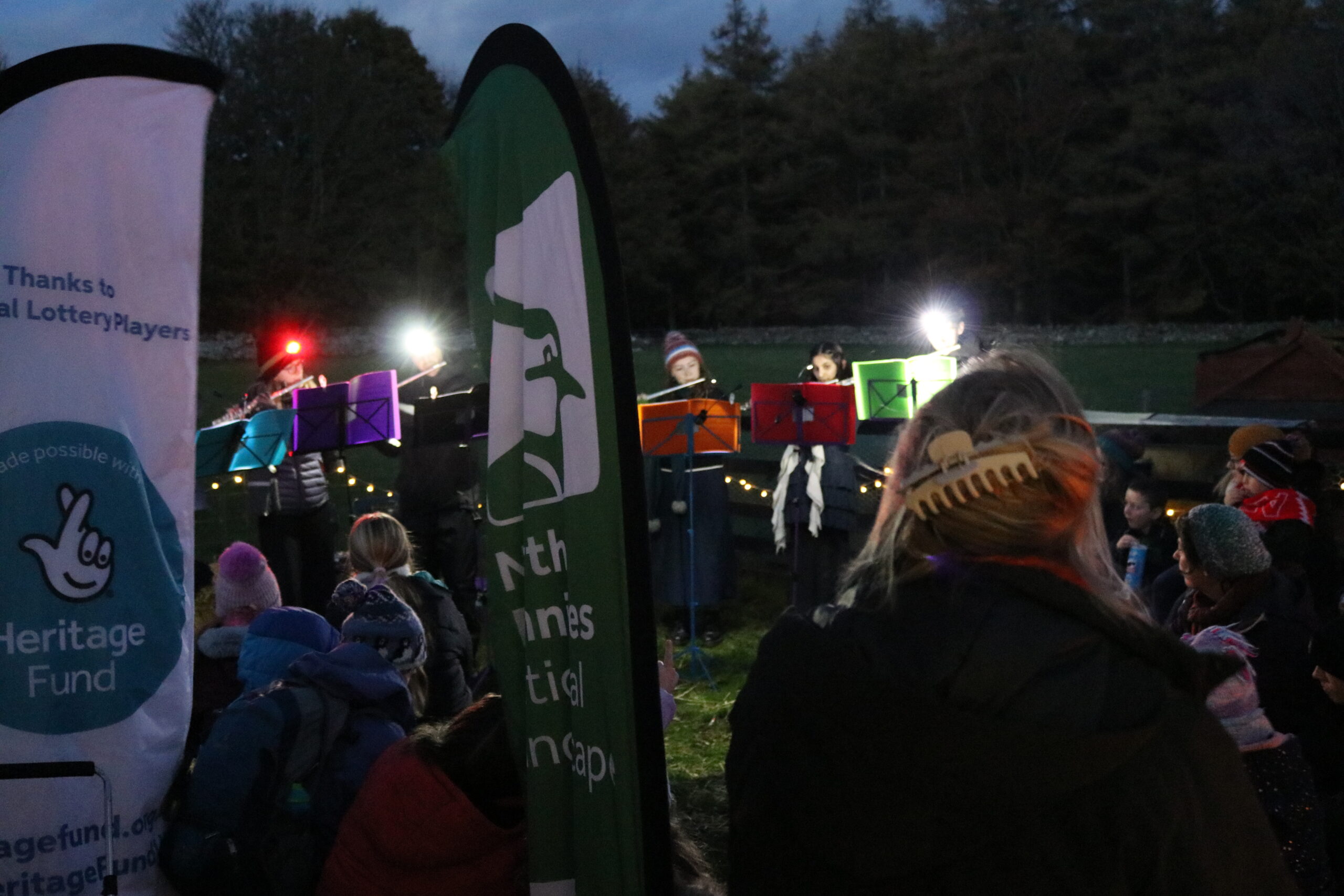
As we moved from the long days of summer to the colder and darker days of autumn, I saw fewer bees but the buzz of communities and events in the North Pennines continued. As part of the North Pennines National Landscape team annual Stargazing Festival, I organised a family-friendly stargazing event at Bowlees Education Farm. Under the sprawling glow of the Milky Way, attendees were guided through the night sky with a local astronomer. Families gathered around the warmth of the firepit with cups of hot chocolate to enjoy tranquil music from Durham University Flute Choir, group singing sessions and celestial arts and crafts. After a jam-packed spring and summer as a trainee, it was fantastic to use the skills I had developed to deliver a successful community event in such a special landscape.
At the time of writing, I am coming towards the end of my traineeship with the North Pennines National Landscape team. While collecting my thoughts for this blog in mid-March, I saw my first bumblebee of the year – an early bumblebee queen making the most of the early spring warmth and first of the flowers blooming in the garden. I feel so fortunate to have had such wonderful experiences over the course of my traineeship and I really feel I have made the most of the amazing opportunities presented to me. Looking to the future, I am inspired and excited to continue my career in conservation.
Tees-Swale: naturally connected, is made possible with funding from The National Lottery Heritage Fund, with thanks to National Lottery players.