News
Telling the story of Quakers and lead mining in the Allen Valleys and Alston Moor
Telling the story of Quakers and lead mining in the Allen Valleys and Alston Moor
24 August 2026
Blog by David Penn, Allendale Quakers
The North Pennines National Landscape team’s Land of Lead and Silver project is all about helping people in North Pennine communities to delve deeper into their lead and silver mining heritage. Allendale Quakers decided that this was a great opportunity to research and publish a book telling the surprising story of the important part that Quakers played in the industry.
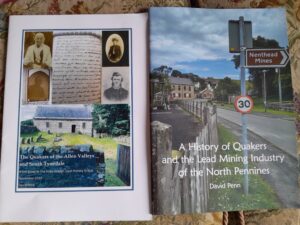
Front and back covers of book
Most visitors to the quiet old meeting houses tucked away in Allendale, Coanwood and Alston would have little idea that the names on the simple gravestones have links to key figures and major events in the area’s lead and silver mining history.
During 2025, and with the help of a community grant from the North Pennines National Landscape team through the Land of Lead and Silver project, David Penn, his wife Jane, and others associated with the Allendale Quaker Meeting began to explore these links starting with a chilly February expedition to Nenthead, the ‘ideal village’ built by the London (Quaker) Lead Company. After looking at the church, chapel, school, reading room and miners cottages, all built at the company’s expense, we followed the old packhorse track from Nenthead Mines over the snowy moors to Coalcleugh, the lead mine complex once managed by local Quaker, William Westgarth.
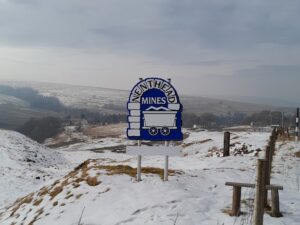
Nenthead
On our way to Middleton-in-Teesdale, HQ of the London Lead Company we found the remains of the Clargill mine-shop above Garrigill, almost buried in snow. It was hard to imagine that anything could have driven miners to work in such remote and inhospitable conditions except the knowledge that the ore from this site was exceptionally rich in silver.
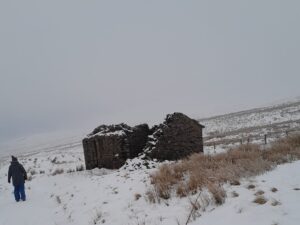
Clargill
We were curious to know more about the part that silver played in the Quaker story. Online research into Quaker records and visits to the Mining Institute in Newcastle and the Science Museum in London led to some fascinating discoveries. The City of London Quakers who established the London Lead Company in 1705 were successful merchants, gold and silversmiths and bankers. The high-quality silver refined from the ore mined at sites like Clargill was sent by the Quaker Company direct to the Royal Mint, and the coins, marked with the Quaker Company’s insignia, became known as Quaker Shillings.
During the preparation of the book a pottery workshop was hosted by Allendale Quakers at the Meeting House as part of the Land of Lead and Silver project. The workshop celebrated the Quaker connection to the lead and silver mining heritage by making some Quaker Shillings from clay. The Quaker Shillings and associated art works are being used to add interest and stimulate discussion about the stories told in the book during talks and public events at which the book is being promoted.
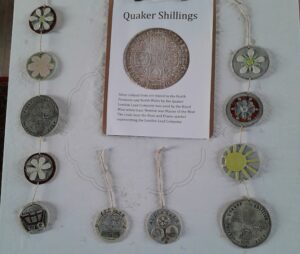
Quaker Shillings
To gain a fuller insight into the essential part which packhorses played in the lead mining industry, David and his family undertook a packhorse journey and talked to the proprietor of Fell Pony Adventures about the training, management and operation of working packhorses. We learnt that providing packhorses for the transport of lead and lead ore would have been a complex and skilled business. Allendale Quaker, Isaac Hall, one of several Allen Valley farmers who supplied packhorses, would have had to know how to breed, care and train these hardy ‘Galloway’ ponies and manage the men and boys who accompanied them in their arduous journeys across the difficult North Pennine tracks.
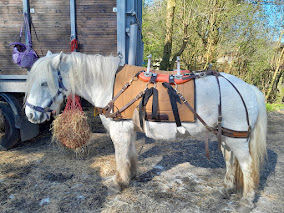
Fell ponies
From genealogical and Quaker records we identified local Quaker individuals involved directly and indirectly in the lead and silver mining industry from the 1700s to the early 19th century, and found many links with Quaker families associated with the Allendale, Coanwood and Alston Meetings into the mid-20th century. We were particularly interested to hear the memories of Quaker connections from Nenthead residents when we took part in the Nenthead200 celebrations in August 2025. We were very pleased to have the opportunity to talk to people about their recollections and to distribute copies of our book ‘A History of Quakers and the Lead Mining Industry of the North Pennines’. Talks based on the book have been given to local history societies in Allendale, Alston and Slaley and to various Quaker groups.
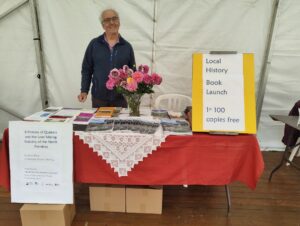
Nenthead200
The production and publication of the book, ‘A History of Quakers and the Lead Mining Industry of the North Pennines’, was supported by a community grant from the North Pennines National Landscape team through the Land of Lead and Silver project which is funded by The National Lottery Heritage Fund and Historic England.