News
Built in stone
6 October 2026
Built in stone
6 October 2026
It’s International Geodiversity Day and this year’s theme is geodiversity on our doorstep. Naomi Foster, the North Pennines National Landscape and UNESCO Global Geopark team’s Geology Projects Officer, has taken a look at the geodiversity you can see around you in the buildings that make up the villages, towns and settlements here in the North Pennines.
We can learn a lot about what makes up a landscape from the materials that people have used in it. Take a look around where you live. Are walls made of bricks, stone, concrete? Are roofs perhaps tiles or slates? Are there paving stones, tarmac, cobbles? In the North Pennines National Landscape and UNESCO Global Geopark, like so many places around the world, people have made use of the diversity of materials available in the earth nearby. From churches and town halls to barns and field walls, local stone is everywhere, both blending in and standing out and being part of the distinctiveness of this landscape.
Perhaps the most striking building stones of the North Pennines are the red sandstones of the Eden Valley. Where the hills of the North Pennines drop away in a clear line along their western edge, every village from Kirkby Stephen in the south to Hallbankgate in the north is bathed in shades of pink and red. These sandstones formed between 200 and 300 million years ago, when this bit of the Earth’s surface was in the middle of a supercontinent and covered by desert. There are two distinct types which show different environments and show up in different ways in the buildings.
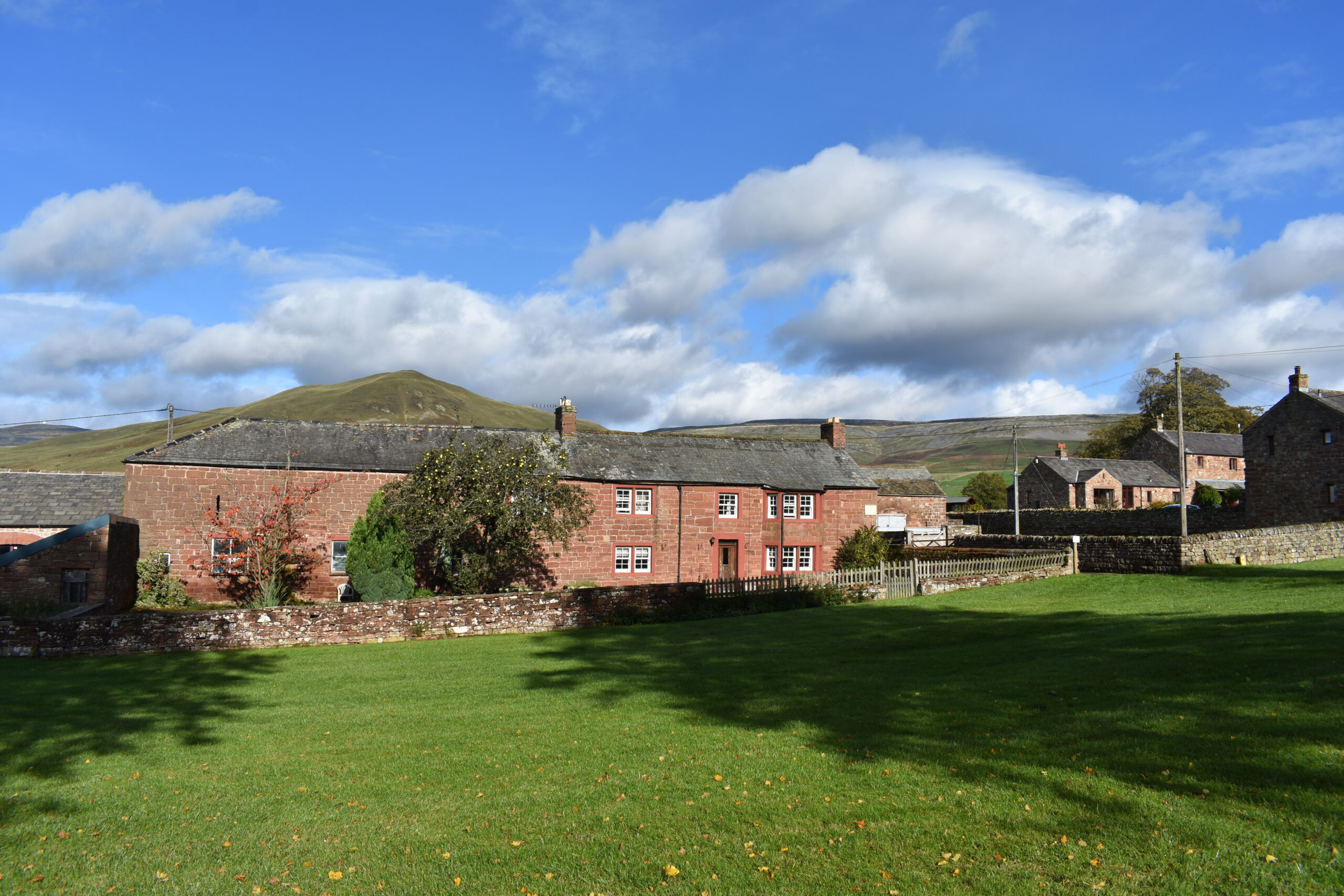
Penrith Sandstone is usually a pinkish colour. If you get close, you can see and feel the big, round grains of sand that sparkle in the sun. These were rounded by being rolled around by the wind in drifting dunes. These big grains make Penrith Sandstone hard to cut into nice neat blocks, but mean it has a very coarse surface perfect for paving stones with a good grip. St Bees Sandstone is usually a bit darker in colour, with smaller grains that were washed down slopes in seasonal rivers and brief flash floods, and stuck together with clay minerals. This makes it less sparkly, but smoother and easier to cut. This is the stone you mainly see used in the walls of buildings in the Eden Valley. The grains of sand in both of these types are coated in a layer of iron minerals, giving them the rusty reddish colour.
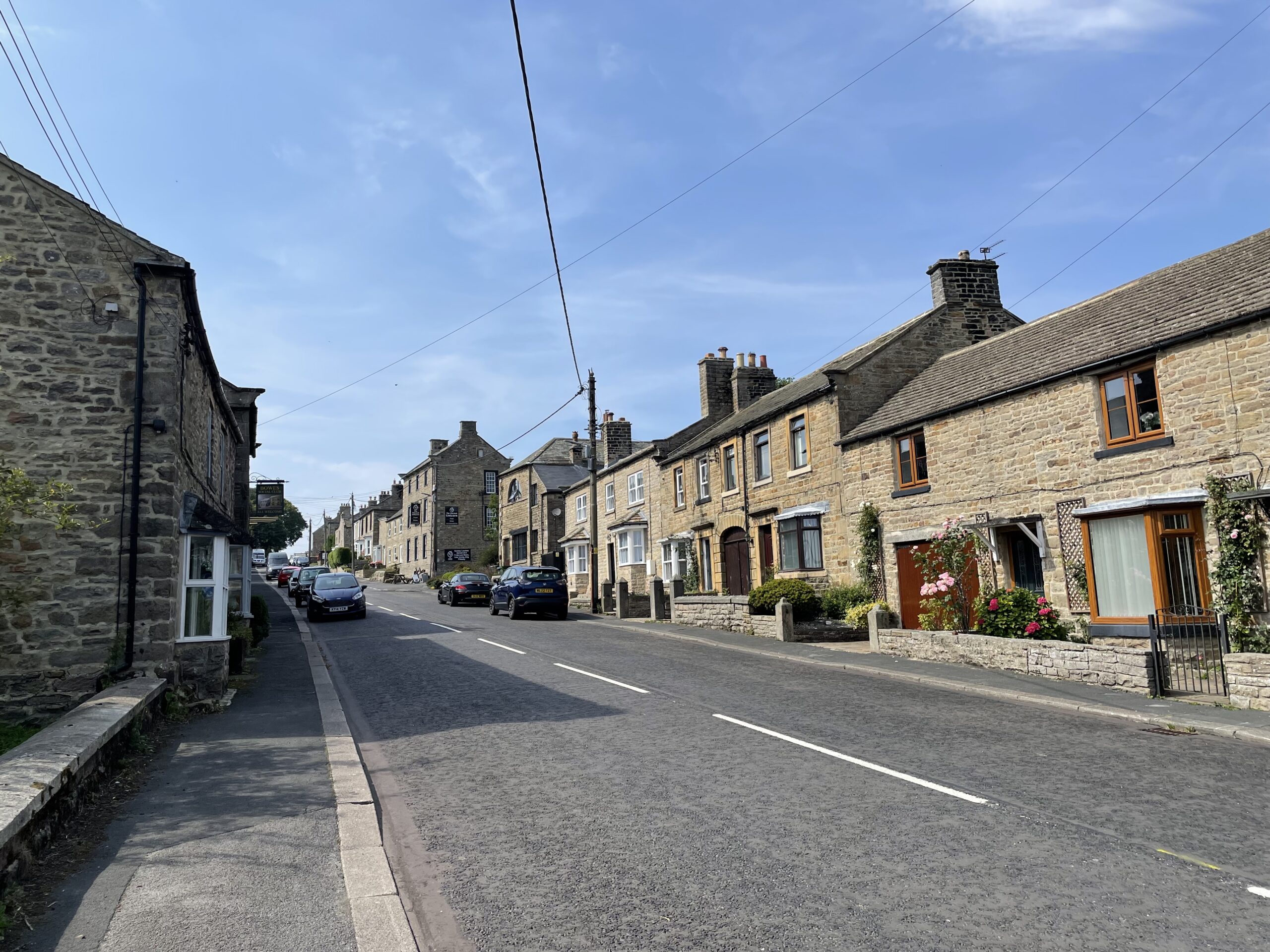
Across most of the North Pennines, the main building stone is a light brown or golden sandstone. Most of the drystone walls that criss-cross the valleys are this sandstone, as are the houses and other buildings from Alston Moor to Weardale and the Allen Valleys to Baldersdale. This sandstone is older than the red sands of the Eden Valley, having formed between 300 and 360 million years ago. At this time, what is now the north of England was on the edge of a shallow, tropical sea, repeatedly covered by sand in vast river deltas. Today the sandstone forms the flat tops of many of the North Pennine hills and is relatively easy to work with, making it a very popular building stone.
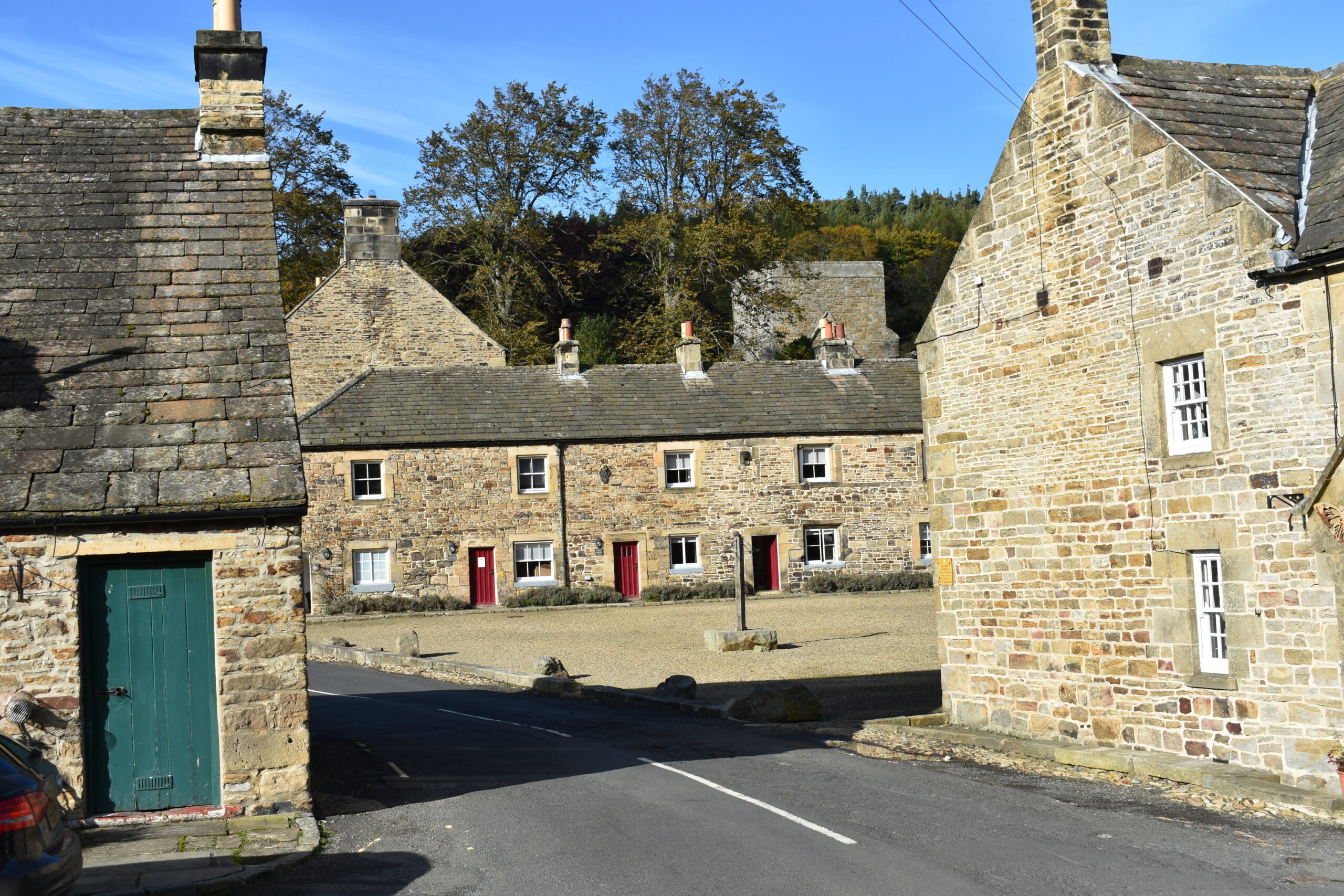
Changes in materials used also tell a story. Older houses in the North Pennines sometimes still have their original roofs, made of thin slabs of sandstone. Blanchland is a great place to notice this, where stone from nearby Ladycross Quarry could be split into thin layers. But on newer houses, or where roofs have been replaced, slate is often used. There is some slate under the North Pennines, formed from mud on the sea floor as an ancient ocean was squashed by moving tectonic plates. But it is not exposed in many places and does not easily split into big, flat pieces. One small-scale commercial use of it was as slate pencils made in Upper Teesdale. The slates used on roofs arrived from further away; greenish ones from the Lake District and purplish ones from North Wales. The arrival of the railways in the 1800s made it practical to bring in a lot of these non-local stones.
We humans like to shape our environment, building for shelter, travel and to show ownership. But even in making these artificial things, we reflect the natural landscape and make the geodiversity around us all the easier to see.