News
Northern Adders Conference 2026
Northern Adders Conference 2026
7 May 2026
Blog by Sarah Ingwersen, Education and Engagement Officer
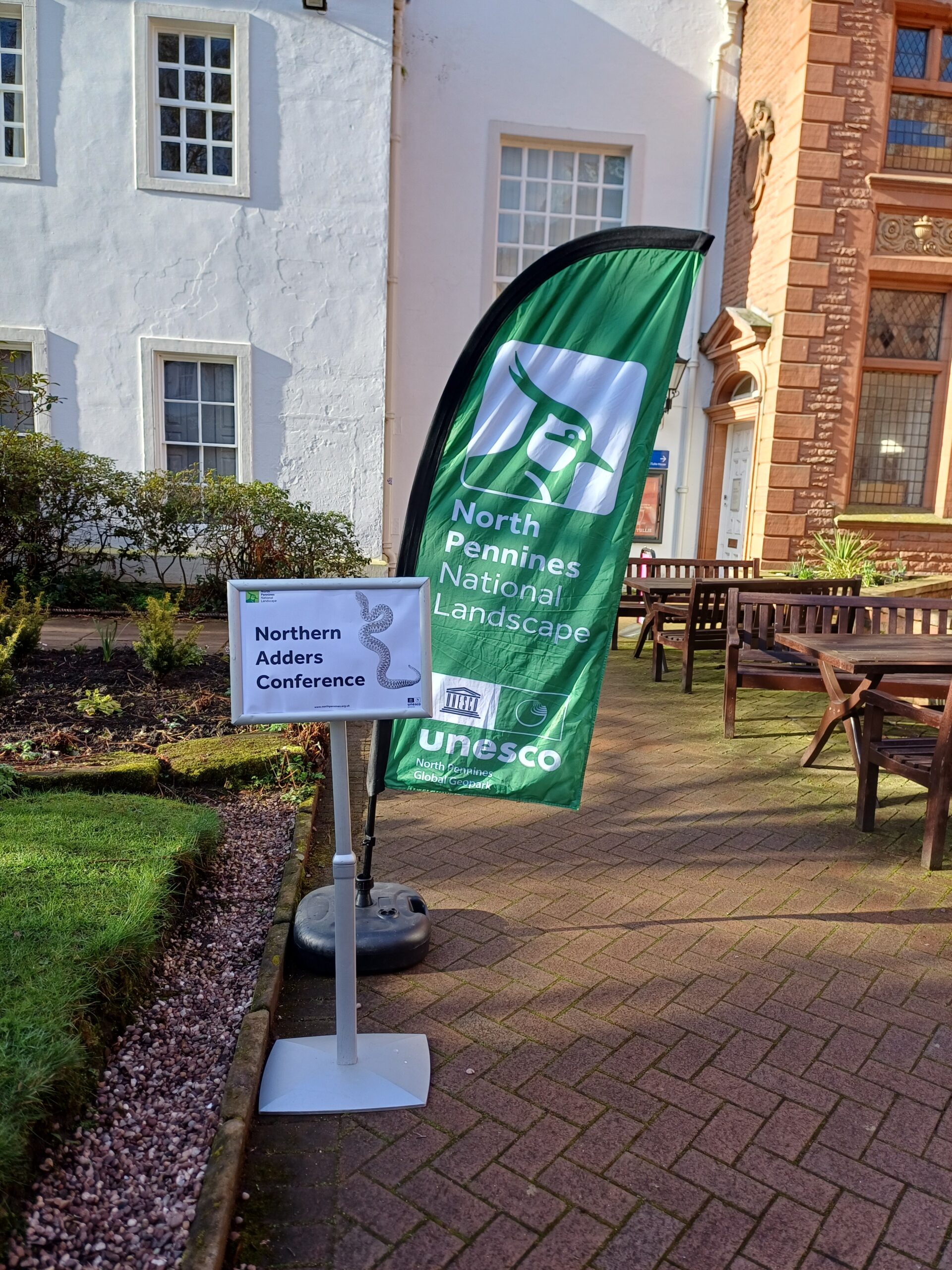
The Northern Adders Conference, hosted by the North Pennines National Landscape team, took place on Saturday 14 March 2026 at Tullie, Museum and Art Gallery, in Carlisle. Over 80 people from across Britain, including landowners, farmers, scientists, conservationists, engagement specialists, consultants, students, and volunteers, joined together to share their work and involvement with adders in the north.
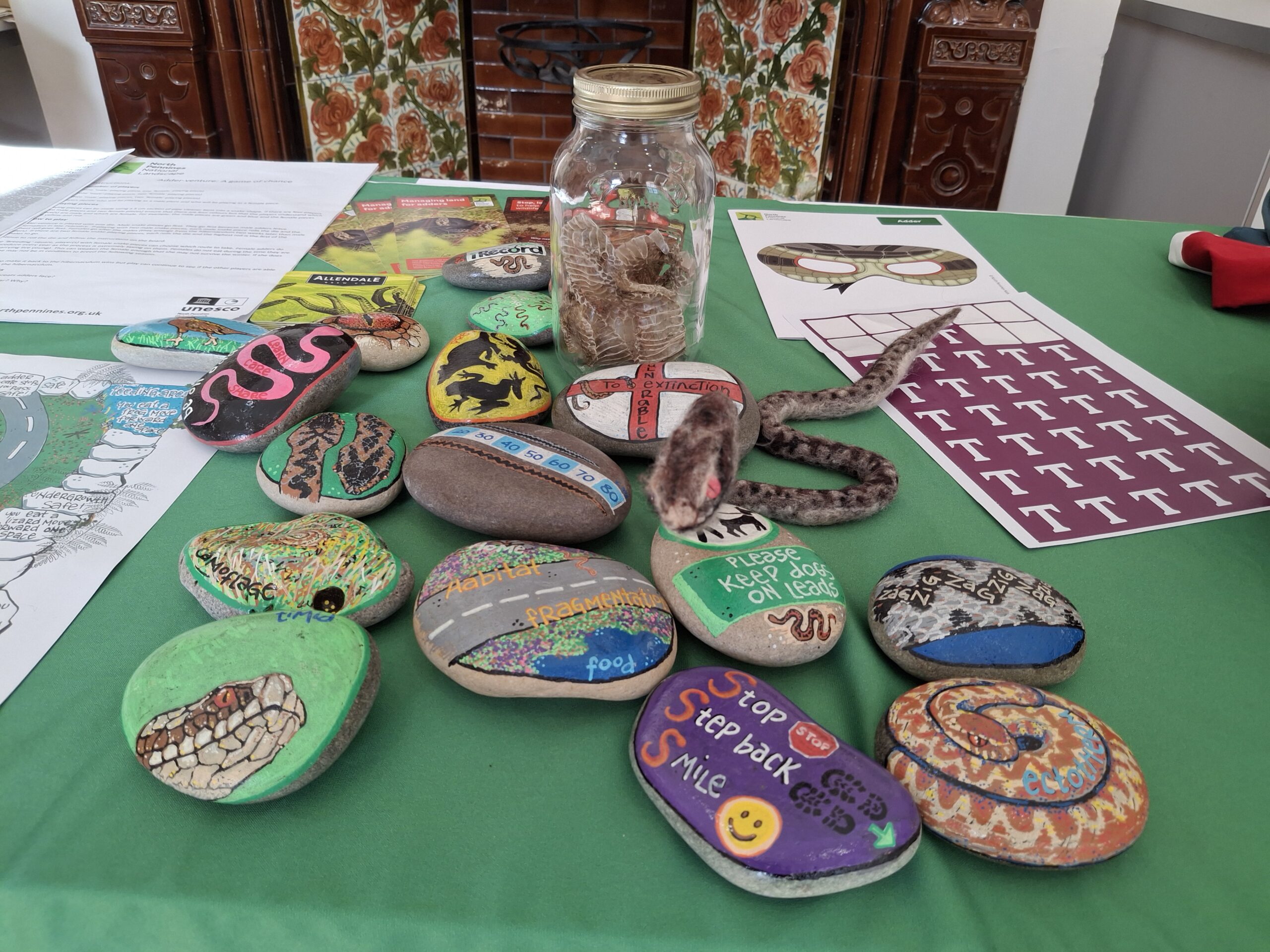
Participants were welcomed by Chris Woodley-Stewart, Director of the North Pennines National Landscape. He offered his opening remarks to give context to the day, then introduced Sarah Ingwersen and Samuel Betts from the North Pennines National Landscape team to talk about the Adders Up project. Sarah and Samuel shared about the work to date on the Adders Up project, funded by The National Lottery Heritage Fund and Northumbrian Water Branch Out Fund. The project aims to improve the understanding of adder distribution in the vast landscape of the North Pennines and foster engagement opportunities across sectors to achieve positive outcomes for adders. Sarah discussed the education and engagement work to dispel myths and misconceptions of adders and outlined some of the creative collaborations to increase awareness of adders. To date, the team has directly engaged with over 3,000 people through events and project activities.
Samuel, conservation officer, summarised the outcomes of volunteer survey efforts and records verification work to date, namely a significant increase in total records submitted and verified within the National Landscape since the project began in 2024. Samuel also discussed recent habitat management works, and the installation of interpretation and signage at several key sites.
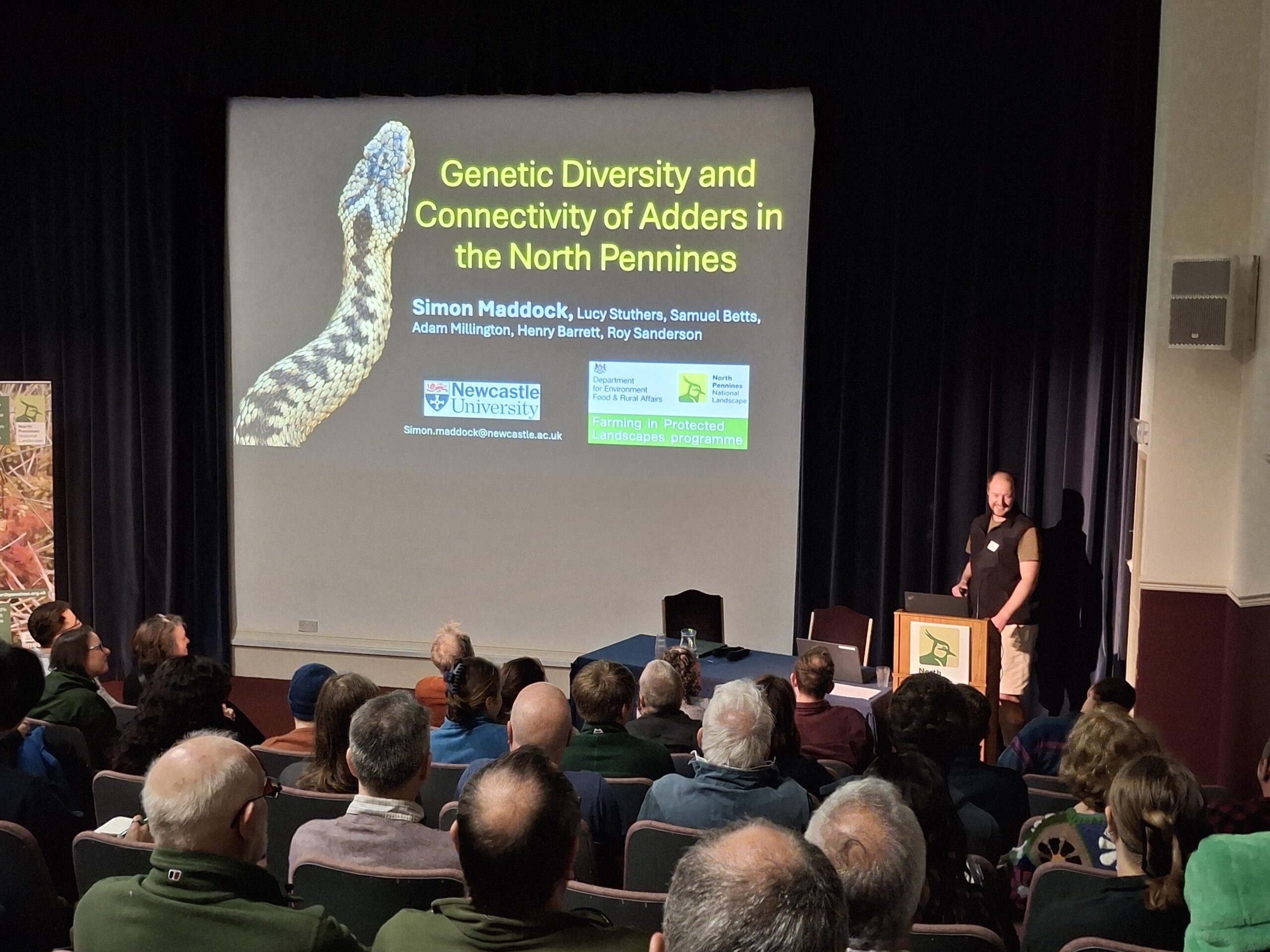
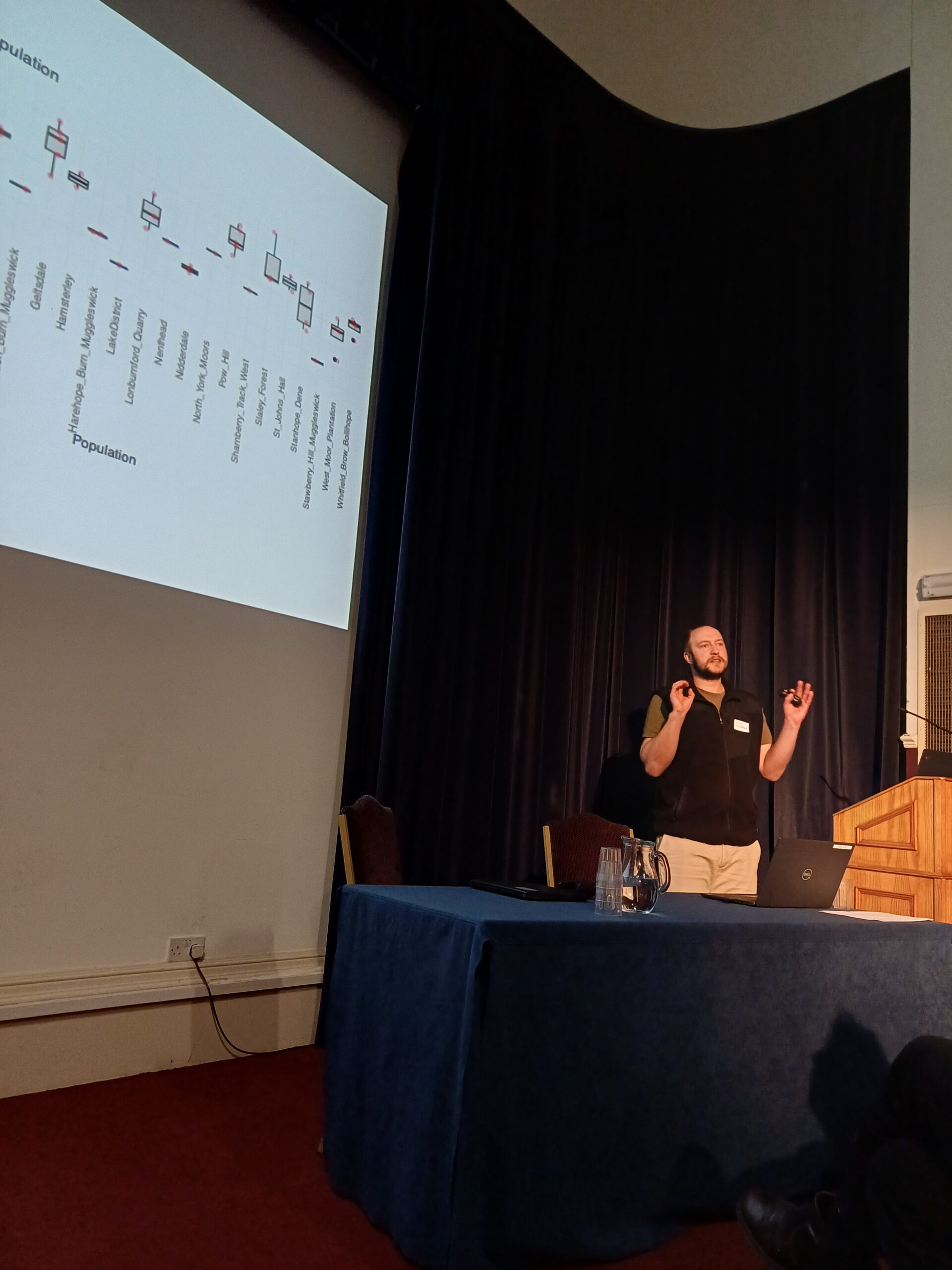
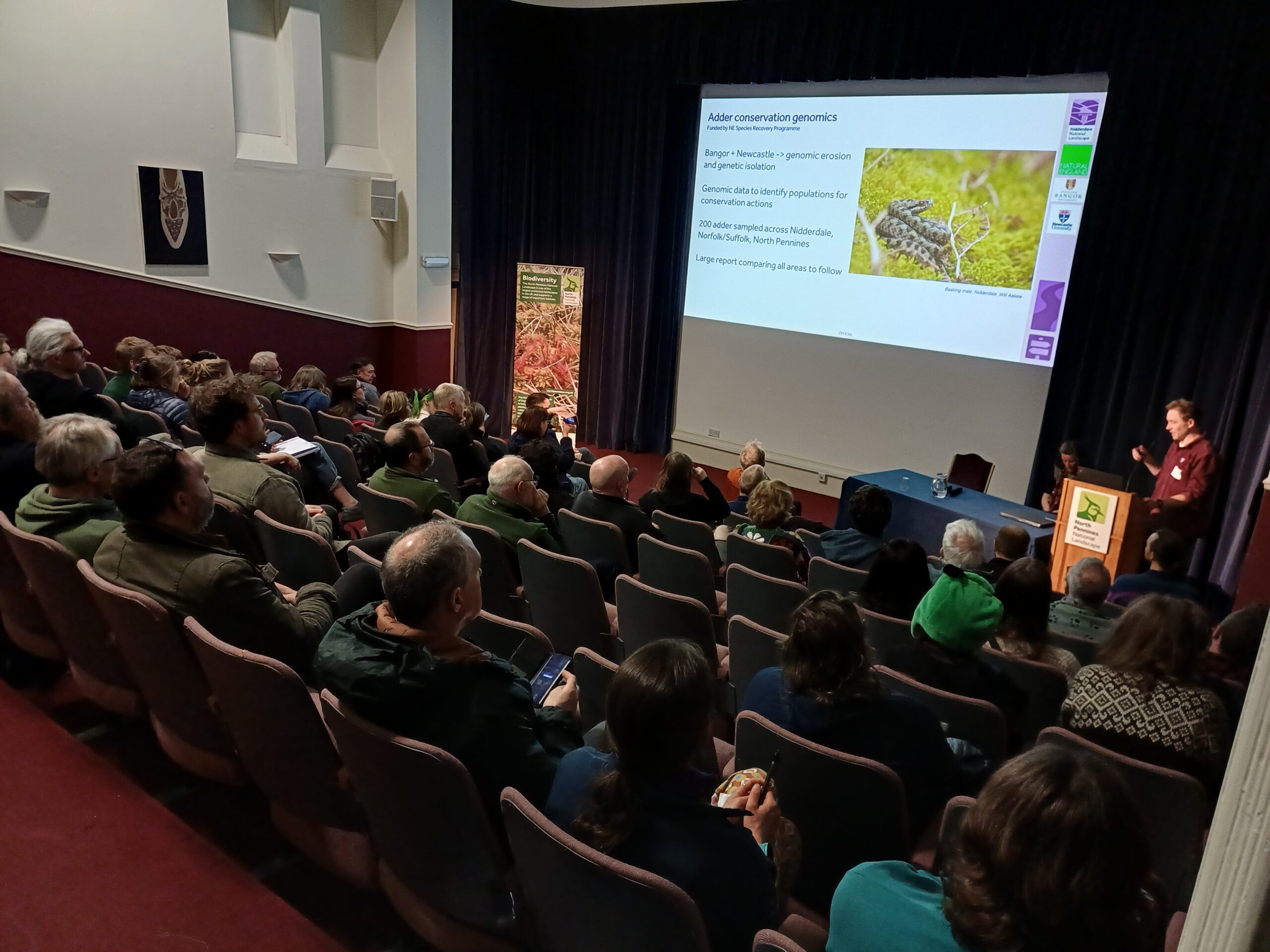
The second talk of the day was ‘Genetic Diversity and Connectivity of Adders in the North Pennines’, presented by Simon Maddock of Newcastle University. Simon gave a quick lesson on genetic diversity and its implications for conservation, which is not an easy task in a 15-minute presentation. He outlined the genetic sampling and research of adders in the North Pennines by the North Pennines National Landscape team in partnership with Newcastle University. Initial analyses show that there is variation in the genetic health of populations across the landscape. A report of the results of this research will be available soon.
Suzie Collinson gave a fascinating talk, titled ‘Cumbria ARG – Working Together on the Ground: Seven Years of Volunteer-Led Adder Conservation in Cumbria’. Suzie’s talk sparked conversation and ideas about different projects. The work of Cumbria ARG volunteers has resulted in an increase in adder populations and locations recorded in Cumbria, an amazing 1075% increase from 2016- 2024. We heard about the identification of individual adders by comparing head scalation patterns (accompanied by wonderful photos and observations from Adam Moan) as well as the use of camera traps to monitor adders to observe rare or new behaviours.
Emma Douglas, Wales Facilitator (Pasture for Life, Gower Meadow Beef) delivered the next presentation, ‘Grassland management for reptiles.’ Emma’s talk about her work in conservation grazing was informative. As a farmer and conservation grazing advocate, Emma provided a unique perspective on the behavioural characteristics of different types of livestock, and how these traits can be utilised for the benefit of reptile habitat management. Careful choice of livestock can create greater structural diversity and improve habitat for a host of species, including adders. It was both inspiring and encouraging to see the direct benefits of this work through Emma’s photos of gorgeous landscapes around and on the Gower Peninsula.
Stephen Corcoran of Corcoran Consultants delivered ‘Adders and Peatland Restoration.’ This brilliant talk about adders and peatland restoration was informative and practical. Stephen was our most northerly presenter traveling south from Scotland (for a Northern Adders conference). We learnt how restoration activity could impact adders both negatively and positively. Stephen also discussed how to mitigate for adders, particularly on large-scale projects, and led us through selected case studies of when adders were not part of restoration planning before discussing guidance for adders around peatland works.
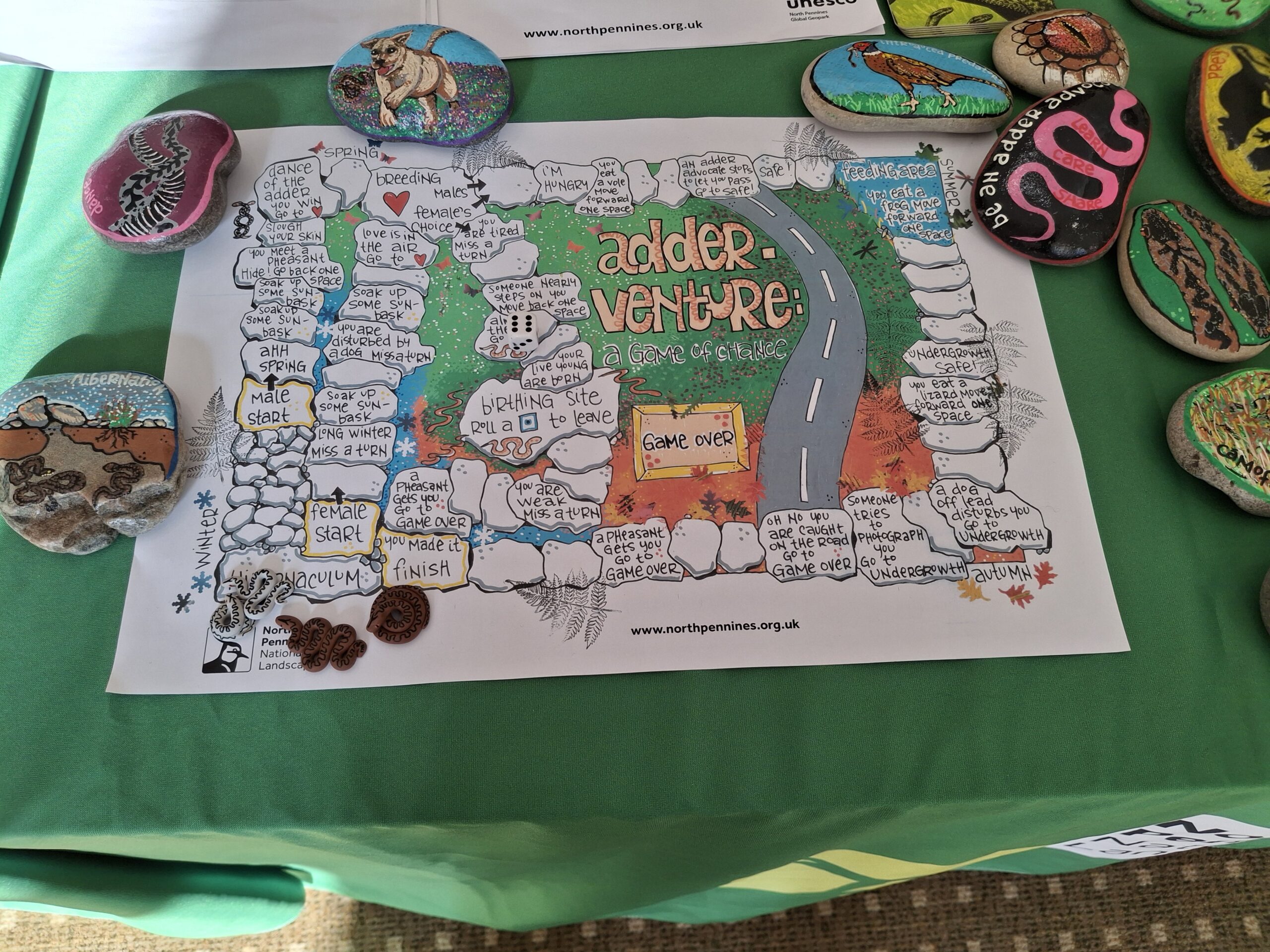
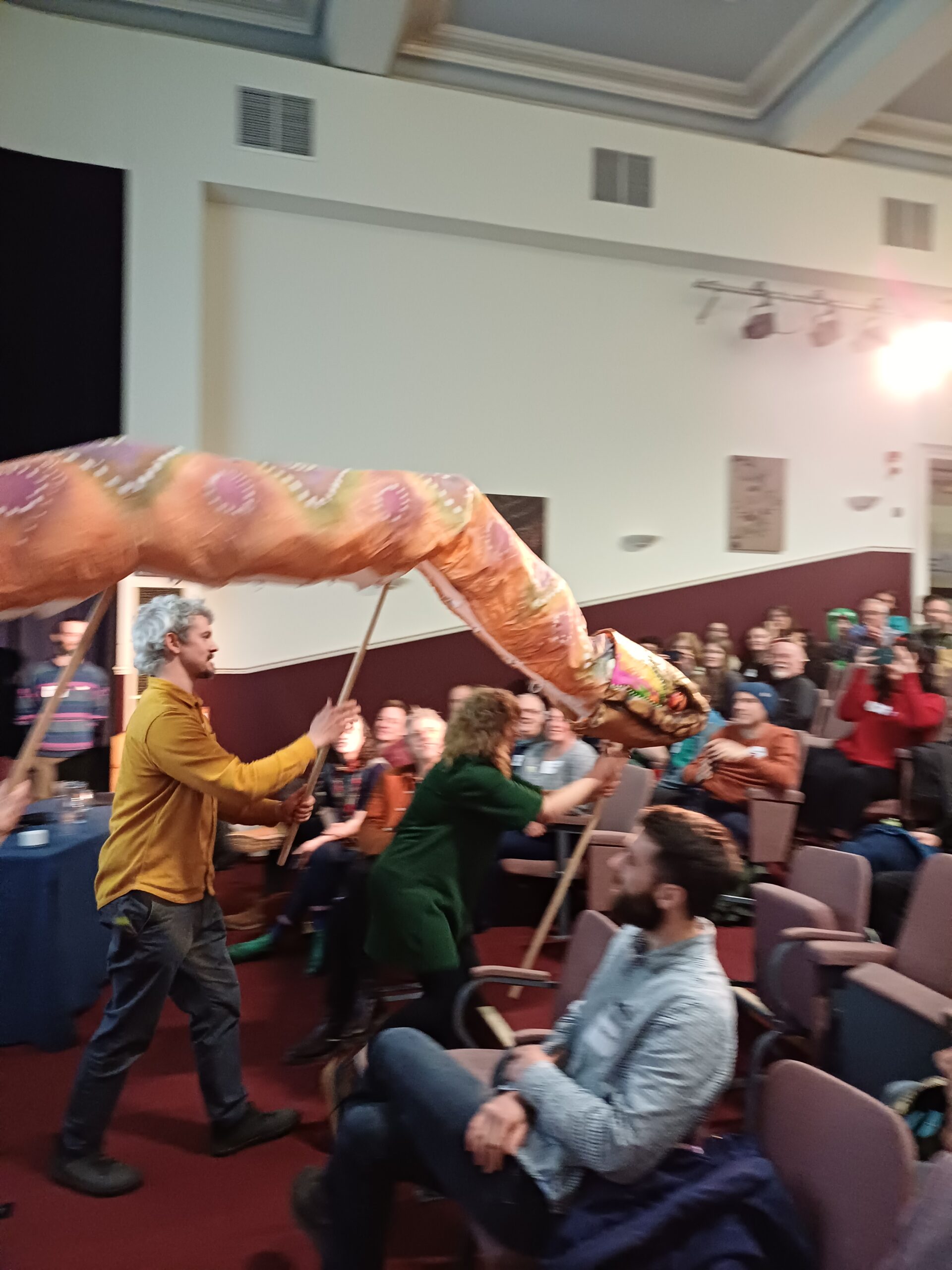
After an informative and inspiring morning, puppeteers with a giant adder puppet (commissioned artwork from the North Pennines National Landscape team) led everyone to lunch, served by Tullie, where there was opportunity to share discussions and develop new contacts.
Lunch was followed by breakout sessions, where participants could attend two of the three available sessions including: ‘Generating a shared vision for adders in the North’, ‘An introduction to wildlife recording’, and ‘Viper cinema’.
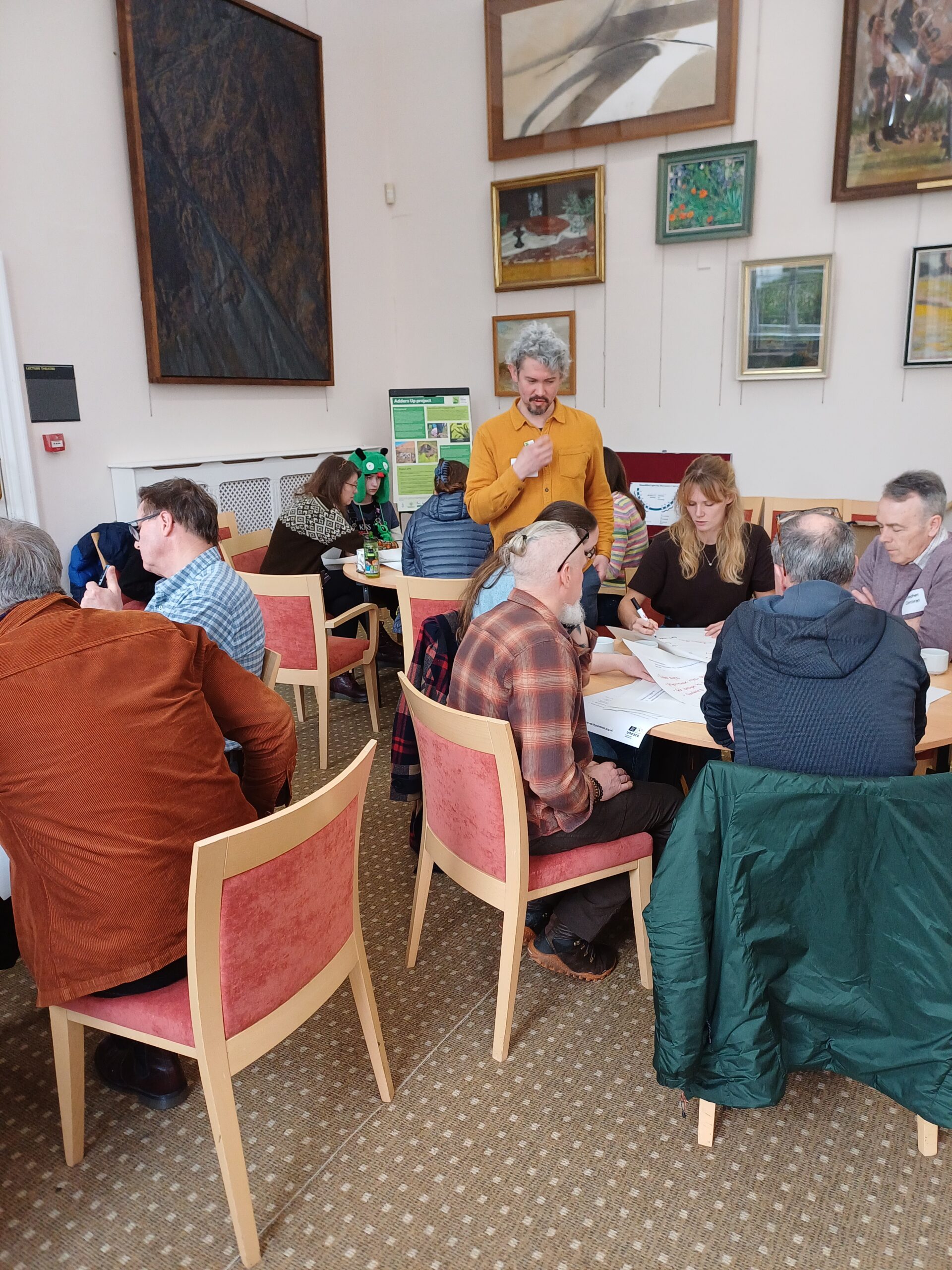
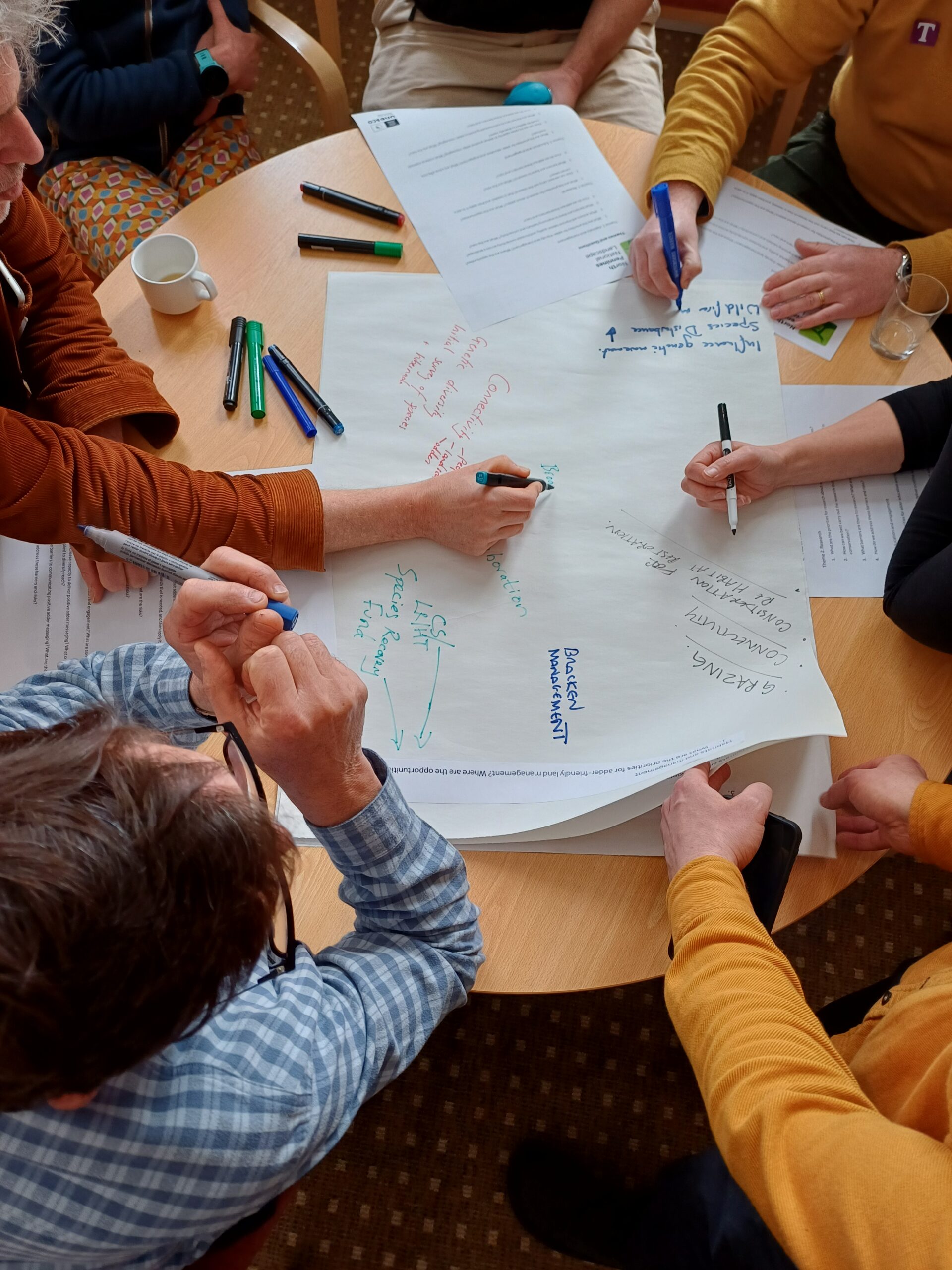
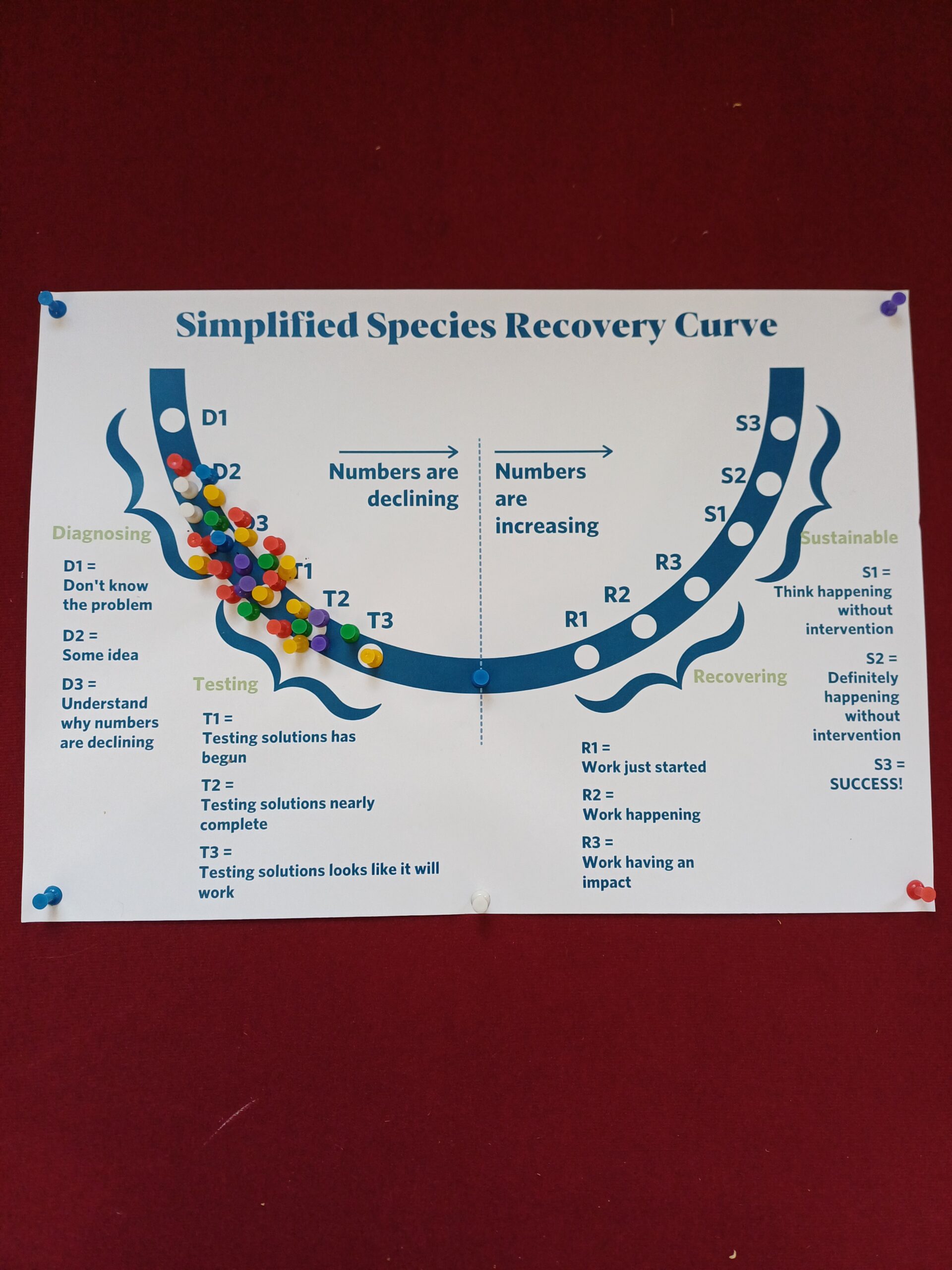
The shared vision workshop involved quick fire rounds to gather ideas on engagement and education, research, and habitat management. The purpose was to, collectively, create a vision for adders in the uplands both now and for the future centred around priorities and opportunities, barriers and risks, and ways to overcome identified barriers.
Martin Harris from the Cumbria Biodiversity Data Centre (CBDC) led the ‘An introduction to wildlife recording’ workshop. With each group, Martin explained why data collected by citizen scientists is so valuable, explored examples of the pathways for submitting records, and asked – what are the potential problems? The session was engaging and yielded interesting debate, particularly around the balance between our need for data and the protection of sensitive species from unwanted attention.
The Viper cinema session showed the award-winning ‘Vanishing Vipers’ created by Beth Dicken-Jones. Her short film focusses on adders in the UK and what we can do to help them. To see Beth’s stunning footage of adders on the big screen was a real treat, and it was great that Beth and her family were able to watch it for the first time on a big screen. The second film was a recorded presentation by Balint Halpern of the Hungarian Meadow Viper project. Balint’s talk discussed the success of the project in captive breeding and release of the critically endangered Hungarian Meadow viper. The talk also focused on their radio telemetry research, tracking meadow vipers to learn more about the movement in habitats, the overwintering behaviours as well as predation.
All participants returned to the auditorium after a brief break to hear Kelly Harmar of Nidderdale National Landscape and Will Askew of Natural England discuss their work, ‘Adders in Upper Nidderdale and the Washburn Valley’. Kelly detailed the volunteer and conservation efforts to survey for adders, through which they have found 50 hibernacula and more than five sites with 10+ individuals. A positive finding when 90% of UK adder populations are considered to be small, having fewer than 10 individuals. Kelly also discussed the concerns and potential threats for adders within Nidderdale National Landscape. Will then described the conservation genomics project led by Natural England across Nidderdale, Norfolk, Suffolk and the North Pennines, focussing on the findings from Nidderdale. The results of this research will be published soon.
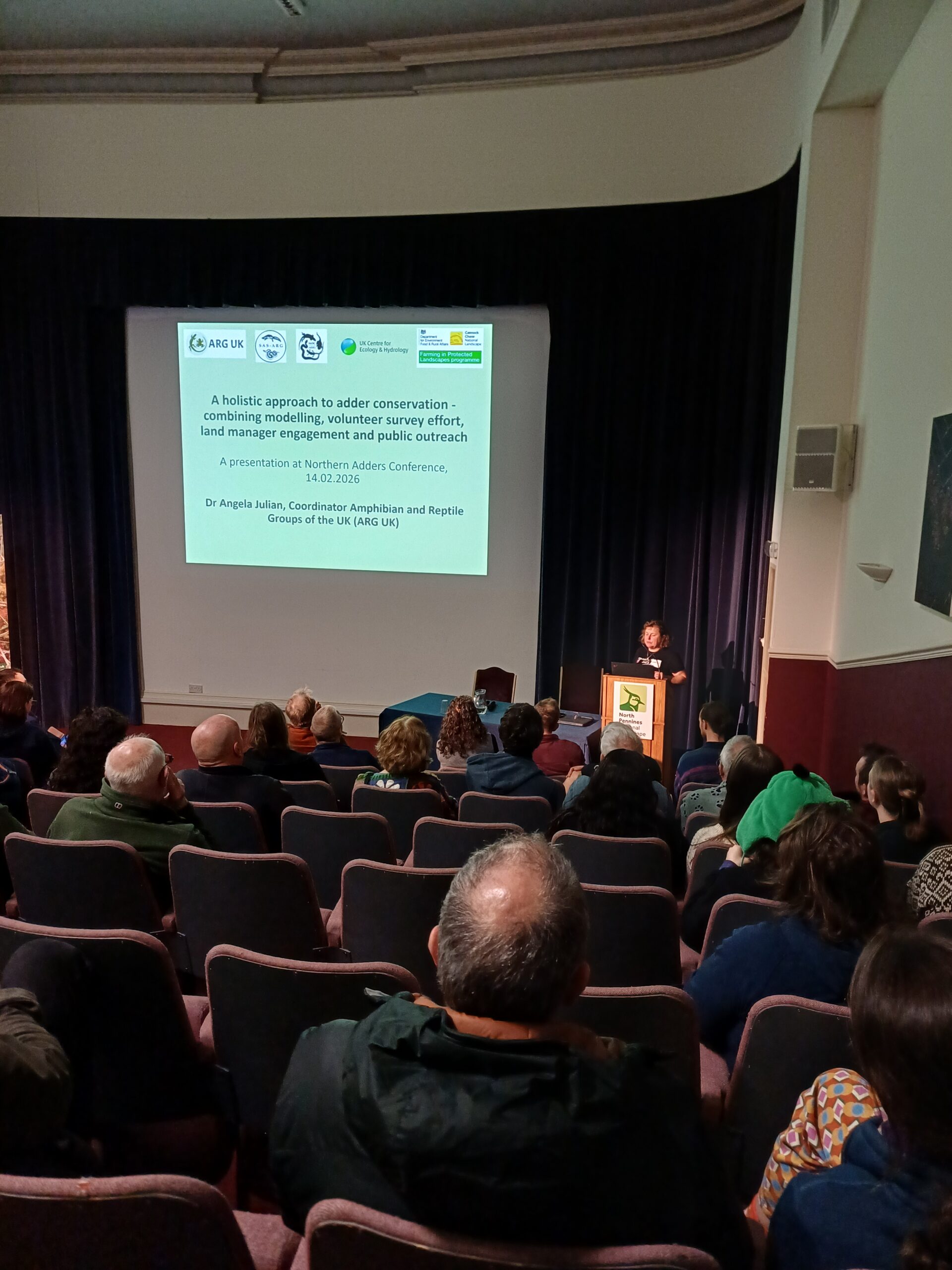
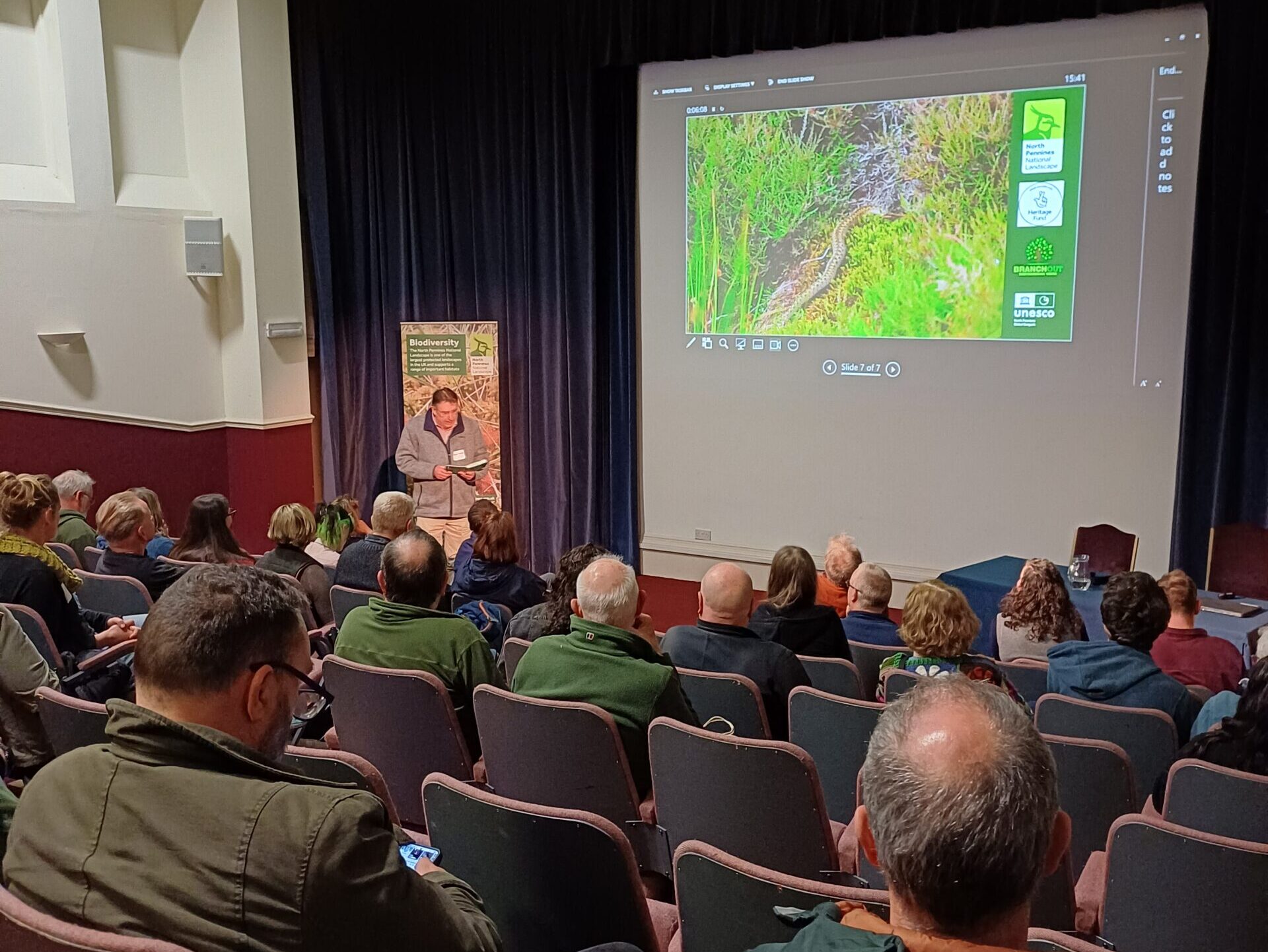
Angela Julian of ARG UK presented ‘A holistic approach to adder conservation – combining modelling, volunteer survey effort, land manager engagement and public outreach’. Her dynamic talk discussed how ARG used a combination of modelling, volunteer surveys, land manager engagement, and outreach to study the adder populations at Cannock Chase. Cannock Chase is regarded as a stronghold for UK adders, despite no formal surveys to back this up, and in fact populations may be vulnerable. Over 400 records were collated, from current volunteer surveys to historic and living memory records. Modelling tools, developed by UKCEH, assisted work to identify new potential sites. Volunteers conducted the ground-truthing with positive results so far. Angela’s talk was a brilliant way to sum up the themes of the day and demonstrated the importance of an integrated approach to adder conservation.
Henry Payton-Barrett of the North Pennines National Landscape team gave a brief talk on the upcoming ‘Managing land for adders’ document which provides habitat management guidance relevant in a northern upland context. The guidance will deliver useful and relevant advice for farmers and land managers, and champions and highlights the positive work that is in progress.
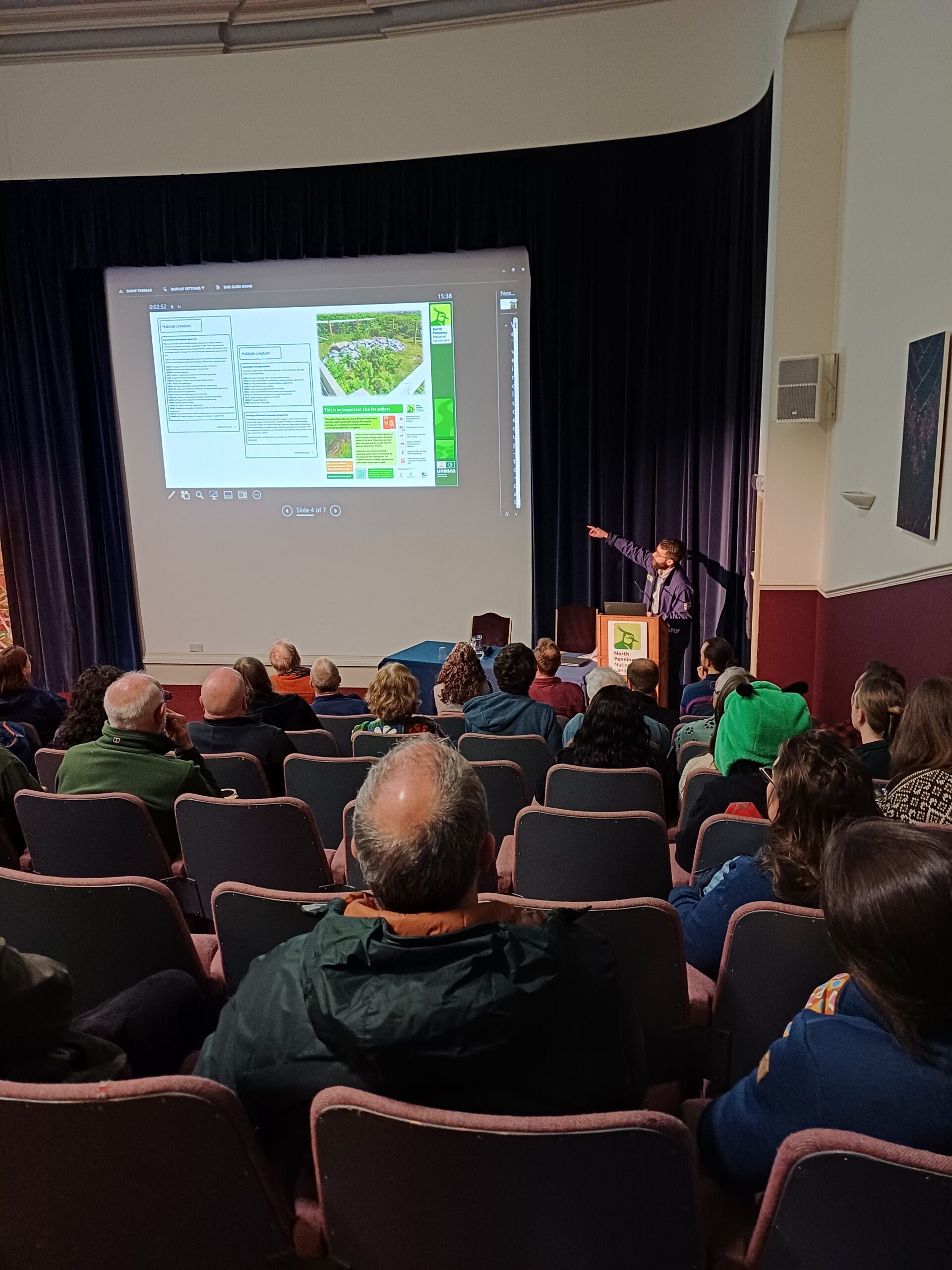
Amongst the participants, Mark Rafferty joined from Scotland representing Ecology Dogs UK. Mark has trained adder detection dogs for use in survey and mitigation works. Mark gave a brief impromptu talk about his work which sparked interest, specifically about the possibility of future applications of adder detection dogs in conservation.
Stephen Trotter, Chair of the North Pennines National Landscape partnership, concluded the conference. Stephen summed up the talks and discussions from the day, and reflected on the positivity of the day and on the overall positive outlook for adders and the conservation efforts in the north.
The feedback from the participants was extremely positive and included comments such as:
“Brilliant and well attended!”
“Very informative and engaging event.”
“Absolutely loved every minute.”
“Positive feeling, so much going on, a great opportunity to get everyone together.”
“Perfect day, look forward to the next one.”
“I love adders, and we need everyone else to love them too – such an underrated species. Also, amazing work from the NPNL team.”
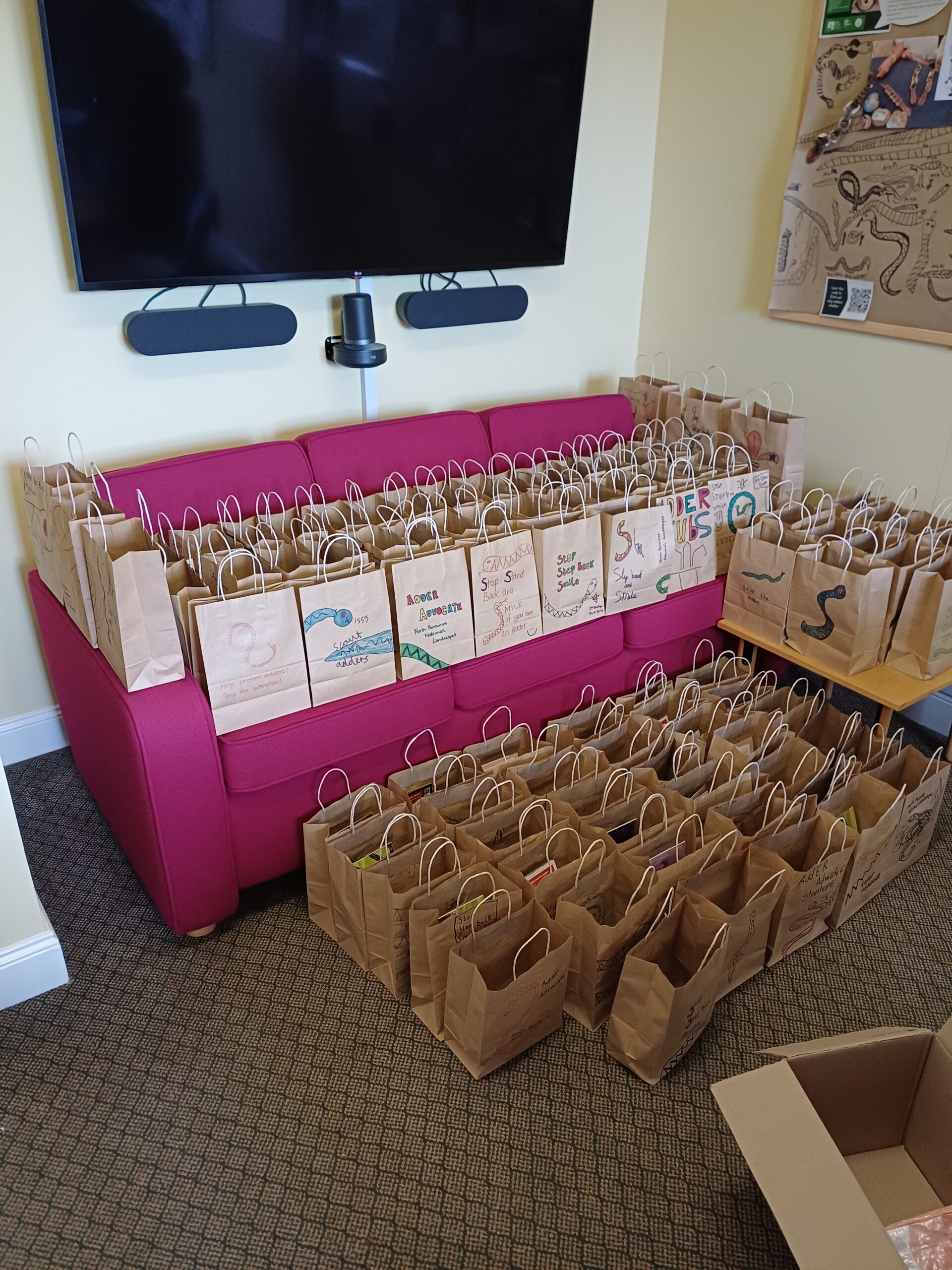
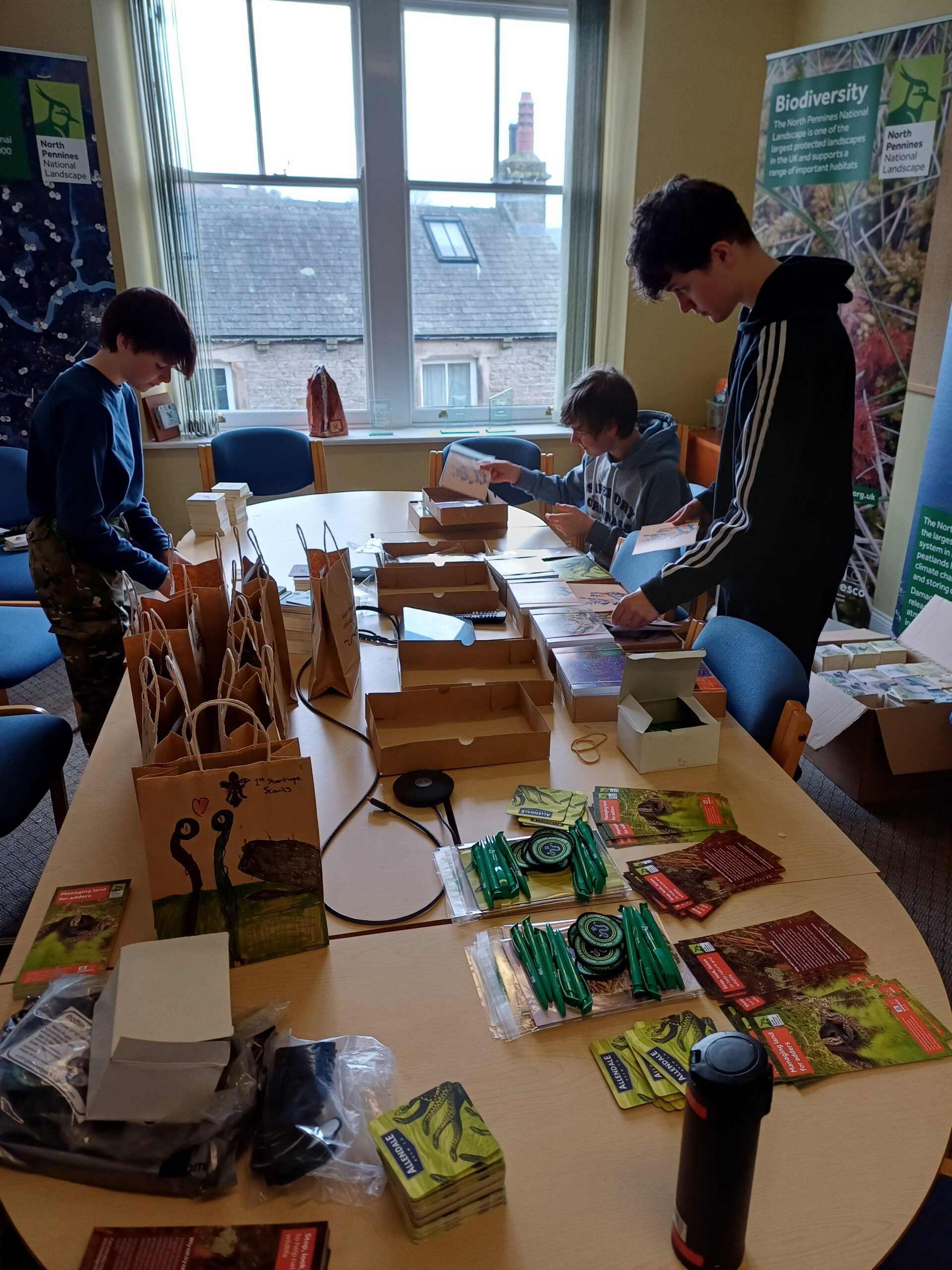
Thank you to everyone from the North Pennines National Landscape team who helped organise the day along with the Stanhope 1st Scouts for designing the gift bags and the work experience students from Wolsingham School for packing the bags. Thank you to Tullie House Museum for providing the excellent venue, service, food, and support. Finally, thank you to all the participants that attended the conference and shared their expertise and enthusiasm for adder conservation in the north.
If you would like to contribute to adder conservation in the North Pennines National Landscape, please visit our events section to sign up to one of our volunteer adder survey events. To find out more about the North Pennines National Landscape team’s Adders Up project and opportunities, please contact Sarah Ingwersen, Education and Engagement Officer, or Samuel Betts, Conservation Officer. Remember to contribute your wildlife sightings to iRecord.
The Adders Up project is led by the North Pennines National Landscape team and funded by The National Lottery Heritage Fund and Northumbrian Water’s Branch Out Fund.