News
National Landscape restores peatlands for twenty years
3 February 2026
National Landscape restores peatlands for twenty years
• Brought 50,000 hectares of damaged peatland under restoration
• Generated £49 million of investment to fund restoration
• Worked in partnership with landowners and land managers to deliver nature recovery over 20 years
This year marks the 20th anniversary of the North Pennines National Landscape team’s peatland work. The work to restore peatlands in the uplands of County Durham, Cumbria and South West Northumberland has achieved national and international significance, not only for the restoration work itself but as a model for partnership working and attracting funding. Since 2006 the team has led restoration work across an area of 50,000 hectares as part of its wider nature recovery and conservation work, in partnership with landowners, land managers and local contractors.
Paul Leadbitter is the Peatland Programme Manager with the North Pennines National Landscape team and has led the work since February 2006. Paul said: “This is a significant milestone for the North Pennines National Landscape and represents an area of our work that has gone from strength to strength over the past 20 years. All of the work we have done has been carried out in partnership with landowners and land managers from across the North Pennines and it is this collaborative approach that has brought such large areas of damaged peat under restoration.
“Restoring damaged peatlands is vital for the planet and it is a proud moment to be celebrating just how much has been achieved by our team and our partners in the North Pennines.”
The team began a three-year project to restore damaged peatland in 2006. Twenty years later peatland restoration is a significant part of the work to look after the North Pennines for people, nature and climate.
Funding for the initial project came from the Environment Agency. Since then, the North Pennines team has brought in over £49 million in investment to improve the condition of peatlands, through private sector finance, government funding and grant initiatives.
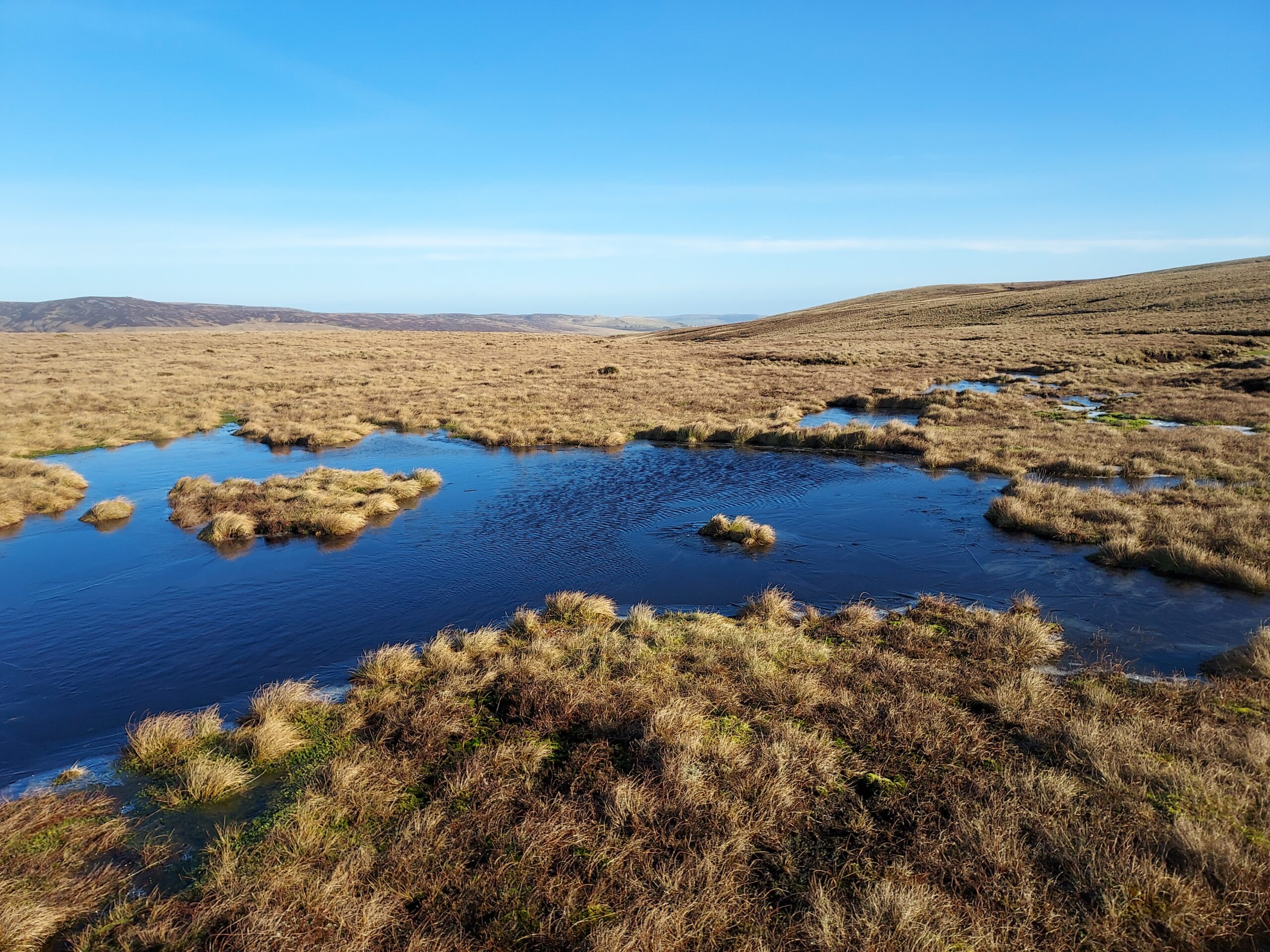
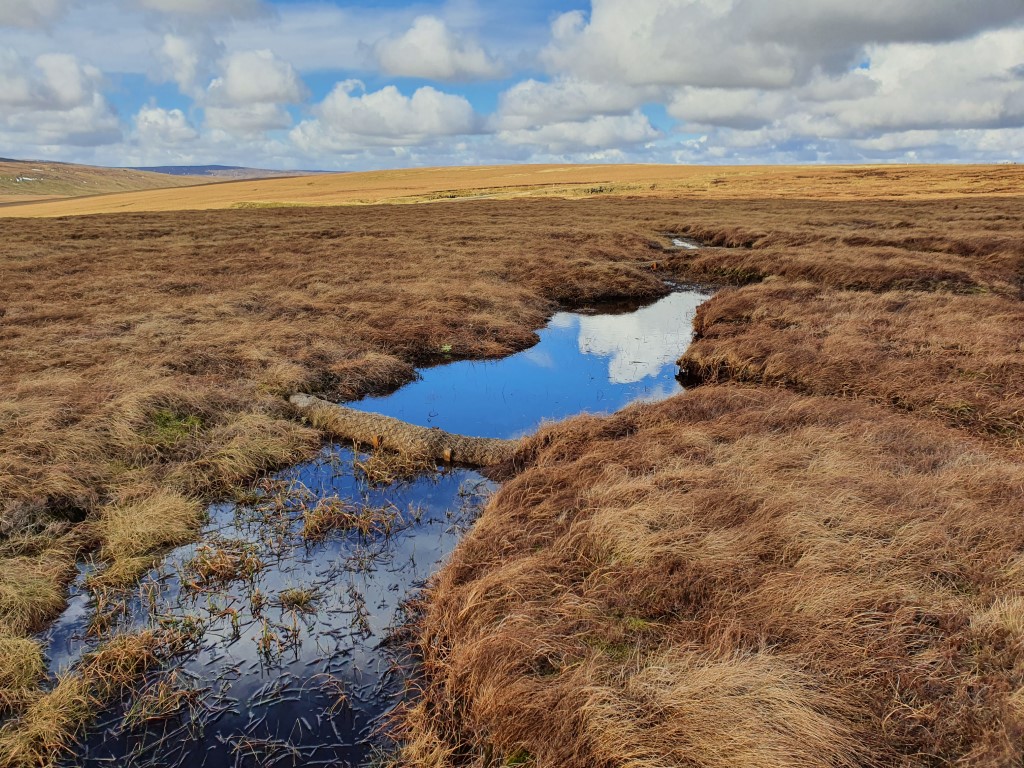
Work on the ground began by restoring areas of damaged peat by blocking grips (channels cut into the peat to drain the land for agriculture), rewetting the blanket bog and allowing it to revegetate. Today, the team uses a variety of techniques to restore peatlands, having developed skills and best practice over the past two decades.
Land on Raby Estate, which covers a large area of Teesdale in County Durham and whose work on peat restoration goes back even further, was among the first sites in the restoration programme. Duncan Peake, Chief Executive of Raby Estates, said: “Raby has been working closely with the National Landscape’s peatland restoration team for many years now. That collaboration has resulted in better decision making, more creativity and improved delivery through enhanced learning. We’re proud of what we have achieved together and look forward to more collaboration in the future so that we can continue to deliver climate, ecological, hydrological, and economic benefits for the North Pennines.”
Restoring peat brings many benefits such as reducing the risk of flooding, filtering water, storing carbon and increasing biodiversity. Globally peatlands cover only 3% of the Earth’s surface but store twice as much carbon as all the world’s forests combined. The North Pennines is home to the largest contiguous area of blanket bog peatland in England.
Dianna Kopansky, Global Peatlands Initiative Coordinator of the United Nations Environment Programme said: “Peatlands are powerhouse ecosystems and restoring them is fundamental to protecting our planet. The North Pennines National Landscape team’s efforts over the last two decades to scale up their peatland restoration work is a huge achievement.
“They have brought in investment in nature-based solutions and contributed to the local economy through the creation of jobs. Their work is a blueprint for how organisations can carry out peatland restoration at a landscape-scale and also a reminder of why continued funding is so critical to allow nature to thrive.”
The National Landscape is also part of a collaborative peatland initiative across the North of England, known as the Great North Bog. The six delivery partners, covering Yorkshire, the North East and North West, work together on this landscape-scale approach to restoring peatlands, making a collective contribution to the UK’s climate and carbon sequestration targets.
Throughout 2026 the North Pennines National Landscape’s social channels will highlight the successes and collaboration of the last 20 years as well as sharing information about ongoing restoration using the hashtag #northpenninespeatlands.
Notes for editors
1. Contact Sarah Hudspeth, Communications Lead from the North Pennines National Landscape team for further information – shudspeth@northpennines.org.uk Phone: 01388 528801 / 07768 123247
2. Images are attached. For alternative images, please contact the communications team on communications@northpennines.org.uk
3. The North Pennines National Landscape is one of England’s most special places – a peaceful, unspoilt landscape with a rich history and vibrant natural beauty. It was designated as an Area of Outstanding Natural Beauty (AONB) in 1988. The purpose of this nationally recognised designation is the conservation and enhancement of the natural beauty of the area.
4. At almost 2,000 sq. kilometres the North Pennines is the second largest of the 46 National Landscapes (in England, Wales and Northern Ireland) and is one of the most peaceful and unspoilt places in England. Visit https://www.national-landscapes.org.uk/ for information about the National Landscapes family.
5. The North Pennines lies between the National Parks of the Lake District, the Yorkshire Dales, and Northumberland with the urban centres of County Durham away to the east. Parts of the National Landscape are within the boundaries of four local authorities; Cumberland Council, Durham County Council, Northumberland County Council, and Westmorland & Furness Council.
6. The North Pennines National Landscape Partnership is an alliance of public, statutory and voluntary sector bodies with an interest in the future of the North Pennines. The work of the partnership is carried out by the National Landscape team which takes action to conserve and enhance the natural beauty of the area, to raise awareness of its special qualities and to improve the quality of life for local people.
7. UNESCO Global Geopark – As well as being a National Landscape, the North Pennines is a UNESCO Global Geopark. This puts the area’s Geopark status in the same UNESCO family as World Heritage Sites and Biosphere Reserves. UNESCO Global Geoparks are places with outstanding geology where special effort is made to make the most of geological heritage to support community and economy. Locally this includes producing geo-trails, developing projects with school and community groups, producing displays for visitor attractions and holding geology festivals and events.